Francis I
the Knight King
The Renaissance king: victor at Marignano, friend of Leonardo da Vinci, builder of Chambord, rival of Charles V.
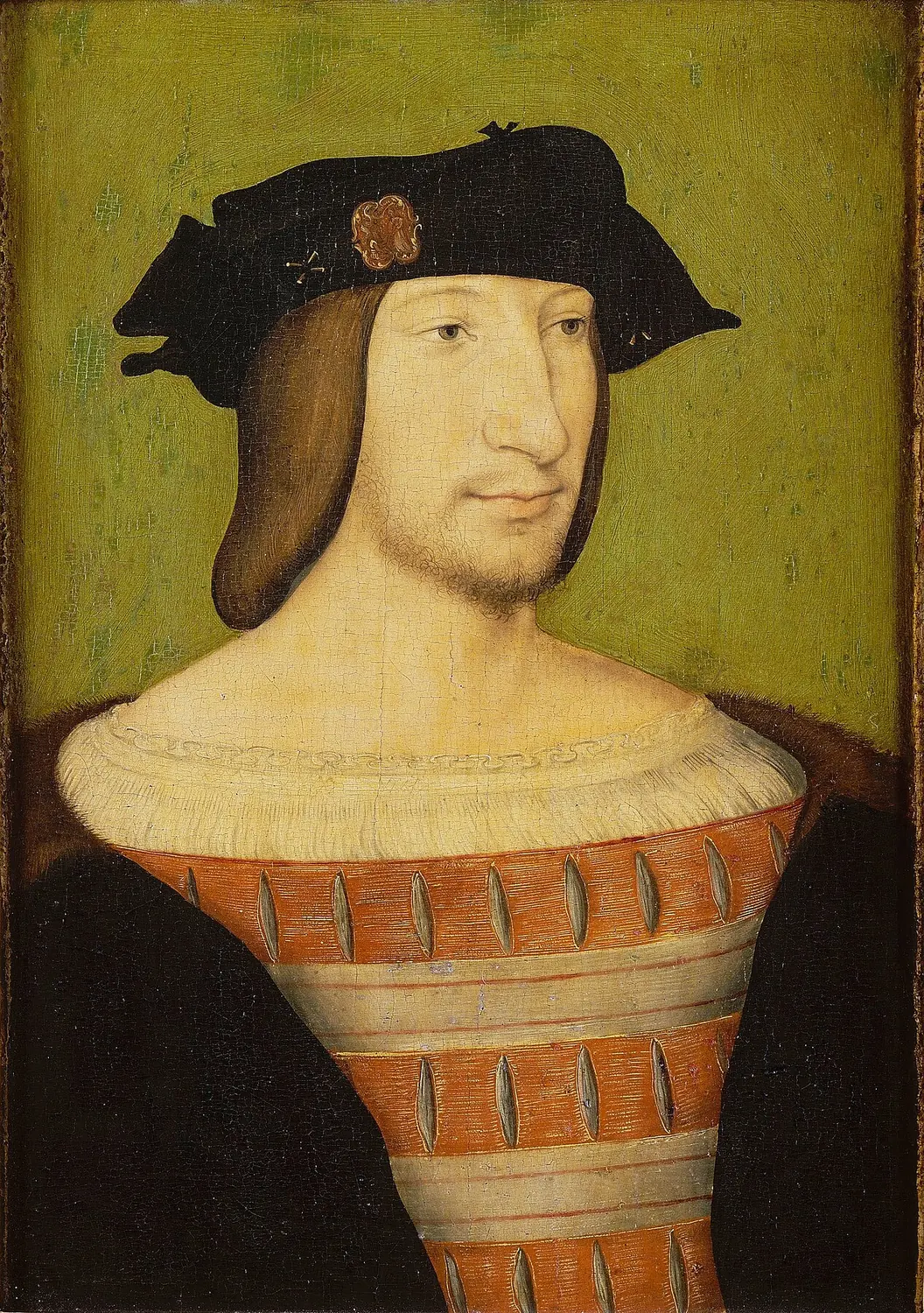
Public domain — Wikimedia Commons
1In brief
Louis XII’s cousin and son-in-law, Francis I reigned from 1515 to 1547. A dashing knight, he triumphed at Marignano in 1515, but was taken prisoner at Pavia in 1525 by his great rival, Emperor Charles V. A patron of the arts and letters, he brought Leonardo da Vinci to France, built Chambord and imposed French in official acts.
2Life
King at twenty, Francis reconquered the duchy of Milan with the victory of Marignano in September 1515. In 1519 he stood against Charles V in the imperial election and lost. A long rivalry began. In 1520 he received King Henry VIII of England at the Field of the Cloth of Gold. In 1525, at Pavia, he was defeated and captured; he spent a year as a prisoner in Madrid and had to leave his two sons as hostages.
He invited Leonardo da Vinci, who settled near Amboise in 1516 with the Mona Lisa. He had Chambord built, transformed Fontainebleau, began the new Louvre and founded the “royal readers”, origin of the Collège de France. In 1539 the Ordinance of Villers-Cotterêts imposed French in legal acts. He sent Jacques Cartier to explore Canada and allied with the Ottoman sultan Suleiman. After the Affair of the Placards (1534) he stepped up the repression of Protestants. He died in 1547.
3Reign
- 1515King; victory at Marignano
- 1516Leonardo da Vinci settles in France
- 1519Building of Chambord begins
- 1520Field of the Cloth of Gold with Henry VIII
- 1525Defeated and captured at Pavia
- 1534Jacques Cartier’s voyage; Affair of the Placards
- 1539Ordinance of Villers-Cotterêts
- 1547Dies at Rambouillet
4Legacy
Francis I embodies the French Renaissance. The Mona Lisa, which he acquired, is now in the Louvre. The Ordinance of Villers-Cotterêts, which also required parish registers of baptisms, is still partly in force.
5Did you know?
After Pavia he wrote to his mother: “Of all things, nothing remains to me but honour and my life, which is safe”, which became the famous “All is lost save honour”.
His emblem is the salamander, carved hundreds of times at Chambord.
6Family
 Claude of FranceWife
 Henry IIChild