Direct Capetians
For more than three centuries son succeeded father without a break: the Capetians patiently built the kingdom of France.
In 987 Hugh Capet was elected king by the great lords of the kingdom. To avoid any dispute, he had his son crowned during his own lifetime, a habit his successors kept for two centuries. From father to son, without a break, fifteen kings followed one another until 1328: historians speak of the “Capetian miracle”.
At first the king directly controlled only a small domain around Paris and Orléans. Louis VI, then above all Philip Augustus, Saint Louis and Philip the Fair enlarged this domain, strengthened royal justice, defeated the Plantagenets and made Paris a great capital.
In 1328 Charles IV died without a son. The great lords set aside women and their descendants, such as the king of England, Philip the Fair’s grandson through his mother, and chose Philip of Valois, a cousin: this was the start of the Valois dynasty and one of the causes of the Hundred Years’ War.
With the Capetians, the son always takes his father’s place: fifteen kings in a row! They enlarged the kingdom little by little. The most famous is Saint Louis, known for his fairness.
- The eldest son succeeds his father
- The royal domain grows around Paris
- Gothic cathedrals rise during their reigns
- Women are excluded from the throne from 1316
The family tree
Click a name to open the profile. Queens appear under their husbands; grey boxes are family members who did not reign.
The rulers
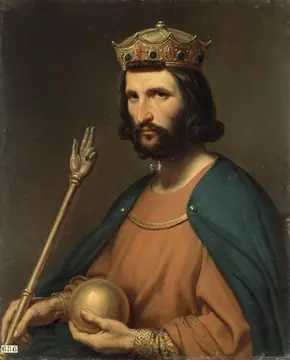 987–996
Hugh Capet
The son of Hugh the Great, duke of the Franks, Hugh was elected king at Senlis in 987, after the death of Louis V. His real power was limited to a few regions around Paris and Orléans, but he took a crucial decision: to have his son Robert crowned during his own lifetime to secure his succession. He died in 996.
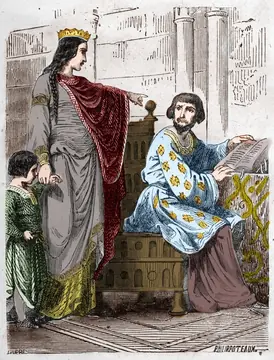 996–1031
Robert II
the PiousThe son of Hugh Capet, Robert was crowned as early as 987 and reigned alone from 996 to 1031. A pupil of the scholar Gerbert of Aurillac, he loved sacred music and prayer, hence his nickname “the Pious”. He conquered the duchy of Burgundy, but his three marriages and his sons’ revolt disturbed his reign.
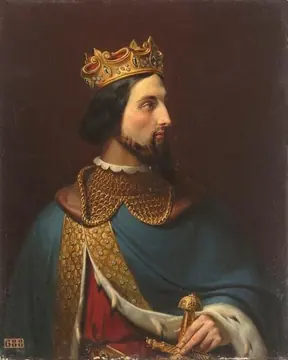 1031–1060
Henry I
The son of Robert II, Henry I reigned from 1031 to 1060. He began by fighting his mother and younger brother, to whom he had to give up Burgundy. He then fought Duke William of Normandy, the future conqueror of England. Remarried to Anne of Kyiv, he was the father of Philip I.
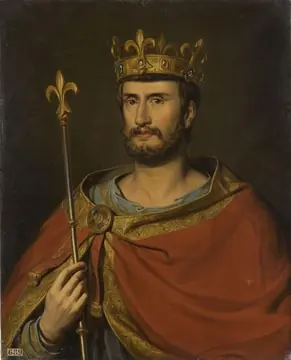 1060–1108
Philip I
the AmorousThe son of Henry I and Anne of Kyiv, Philip was king at seven and reigned from 1060 to 1108, one of the longest reigns in French history. He did not take part in the First Crusade, because he had been excommunicated for carrying off and marrying Bertrade of Montfort, wife of the count of Anjou. Yet he patiently enlarged the royal domain.
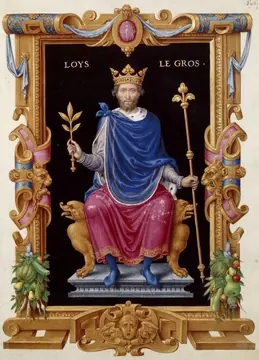 1108–1137
Louis VI
the FatThe son of Philip I, Louis VI reigned from 1108 to 1137. He spent his reign on horseback bringing to heel the plundering lords who threatened the roads around Paris. Advised by Abbot Suger, he defended the kingdom against the emperor in 1124 and married his son to the rich heiress Eleanor of Aquitaine.
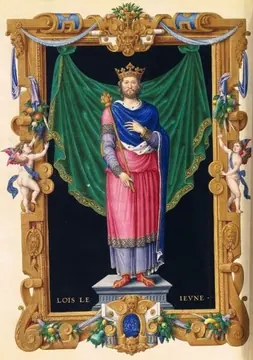 1137–1180
Louis VII
the YoungThe younger son of Louis VI, Louis VII became heir on his brother’s accidental death, then king in 1137. Married to Eleanor of Aquitaine, he set off with her on the Second Crusade, which failed. Their marriage was annulled in 1152: Eleanor married Henry Plantagenet, who became far more powerful than the king of France.
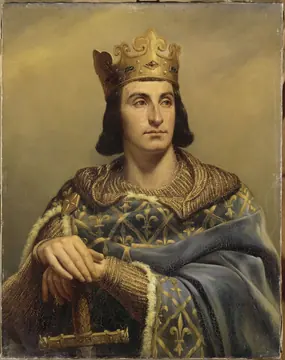 1180–1223
Philip II Augustus
Philip AugustusThe son of Louis VII, Philip Augustus reigned from 1180 to 1223. He wrested Normandy, Anjou, Maine and Touraine from the kings of England, then triumphed at Bouvines in 1214 over a coalition led by the emperor. He surrounded Paris with a wall, built the Louvre and gave the kingdom a real administration.
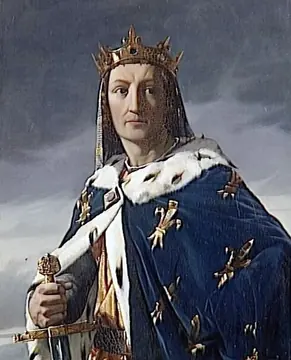 1223–1226
Louis VIII
the LionThe son of Philip Augustus, Louis VIII reigned for only three years, from 1223 to 1226. Before becoming king, he was called in by rebel English barons and entered London in 1216. As king he conquered Poitou, then led a crusade in Languedoc. He died of illness on the way home.
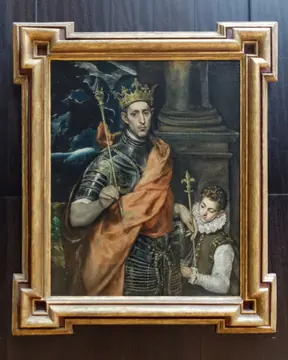 1226–1270
Louis IX
Saint LouisThe son of Louis VIII and Blanche of Castile, Louis IX became king at twelve and reigned from 1226 to 1270. Deeply religious, he wanted to rule according to Christian justice: he reformed the administration, made peace with England and led two crusades. He died outside Tunis and was canonised in 1297.
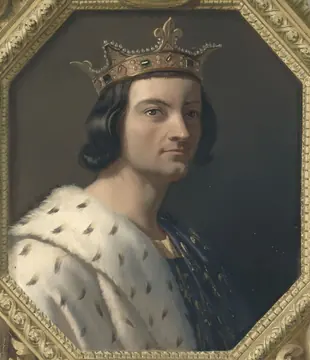 1270–1285
Philip III
the BoldThe son of Saint Louis, Philip III became king in 1270 outside Tunis, where his father had just died. During his fifteen-year reign he inherited the county of Toulouse and prepared the joining of Champagne by marrying his son to the heiress of Navarre. He died in 1285 on the way back from an expedition against the king of Aragon.
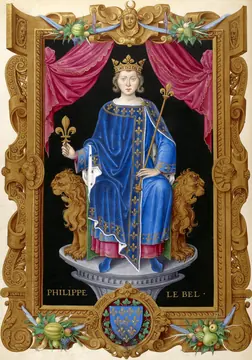 1285–1314, 1284–1305
Philip IV
the FairThe son of Philip III, Philip the Fair reigned from 1285 to 1314. Surrounded by lawyers such as Guillaume de Nogaret, he strengthened the king’s authority over the pope, the great lords and the towns. He clashed with Pope Boniface VIII, had the Templars arrested in 1307 and raised new taxes. His reign is one of the most significant of the Middle Ages.
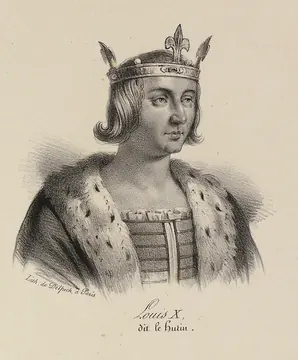 1314–1316, 1305–1316
Louis X
the QuarrellerKing of Navarre in 1305, then king of France in 1314, Louis X reigned for only eighteen months. He faced discontent caused by his father’s policies and a terrible famine. He died suddenly in 1316, leaving a daughter and a child on the way: his succession raised for the first time the question of women on the throne.
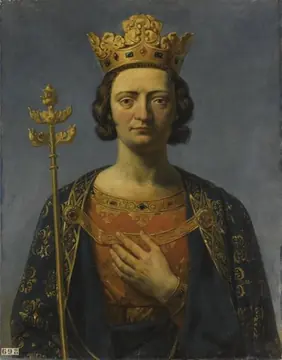 1316–1322
Philip V
the TallRegent after Louis X’s death, Philip became king in 1316 when little John I died. He had himself crowned despite the rights of his niece Joan, and an assembly declared that women did not succeed to the throne. A hard-working, reforming king, he died in 1322 without a son.
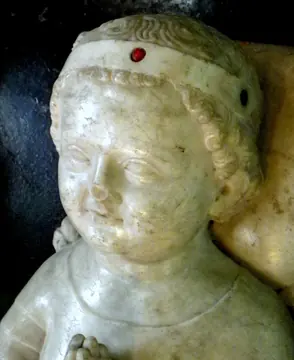 1316
John I
the PosthumousThe posthumous son of Louis X and Clementia of Hungary, John I was king from his birth on 15 November 1316. He died five days later, on 20 November. His uncle Philip, the regent, then became King Philip V. John I had the shortest reign of any king of France.
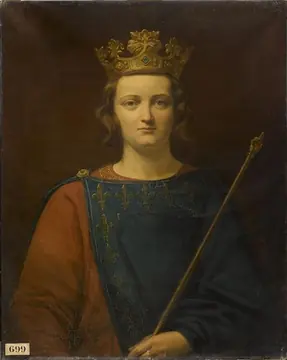 1322–1328
Charles IV
the FairPhilip the Fair’s third son, Charles IV reigned from 1322 to 1328. He married three times in the hope of an heir. He fought England in Guyenne in the War of Saint-Sardos. When he died he left only a daughter, born after him: the dynasty of the direct Capetians died out.
Queens and regents
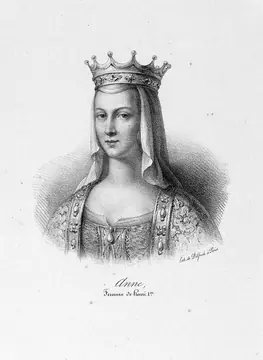 1051–1060, 1060–c. 1061
Anne of Kyiv
The daughter of Grand Prince Yaroslav the Wise of Kyiv, Anne married Henry I in 1051. Mother of the future Philip I, she took part in government after her husband’s death. Her remarriage to Count Ralph of Crépy caused a scandal. She founded the abbey of Saint-Vincent at Senlis.
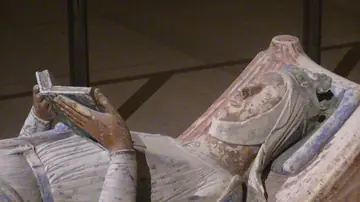 1137–1152, 1154–1189
Eleanor of Aquitaine
Heiress to the rich duchy of Aquitaine, Eleanor married Louis VII in 1137 and became queen of France. After her marriage was annulled in 1152, she married Henry Plantagenet, the future king of England. Mother of ten children, including two kings of England, she played a leading political role until she was over eighty.
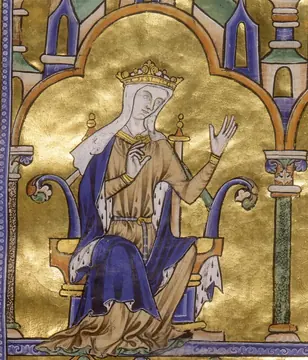 1223–1226, 1226–c. 1235, 1248–1252
Blanche of Castile
A princess of Castile, Blanche married the future Louis VIII in 1200. Widowed in 1226, she became regent for her son Louis IX, aged twelve, and stood up to the rebellious barons. She governed the kingdom again from 1248 until her death in 1252, while her son was on crusade.
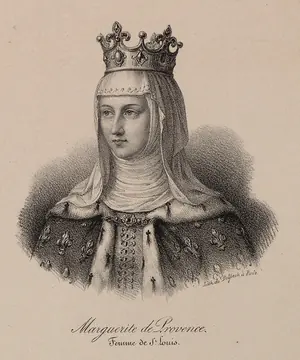 1234–1270
Margaret of Provence
The eldest daughter of the count of Provence, Margaret married Louis IX in 1234 at thirteen. She gave him eleven children. During the Egyptian crusade, while the king was a prisoner, she held the city of Damietta and gathered the ransom. Widowed in 1270, she lived for another twenty-five years.
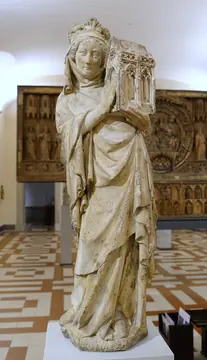 1285–1305, 1274–1305
Joan of Navarre
Joan I of NavarreHeiress to the kingdom of Navarre and the county of Champagne from the age of one, Joan was brought up at the French court and married the future Philip the Fair in 1284. Queen of France at twelve, she governed Champagne herself. The mother of three kings of France, she founded the Collège de Navarre in Paris.