Royal places
Where the kings were crowned, where they lived, ruled and hunted, and where they rest today. All these places can still be visited.
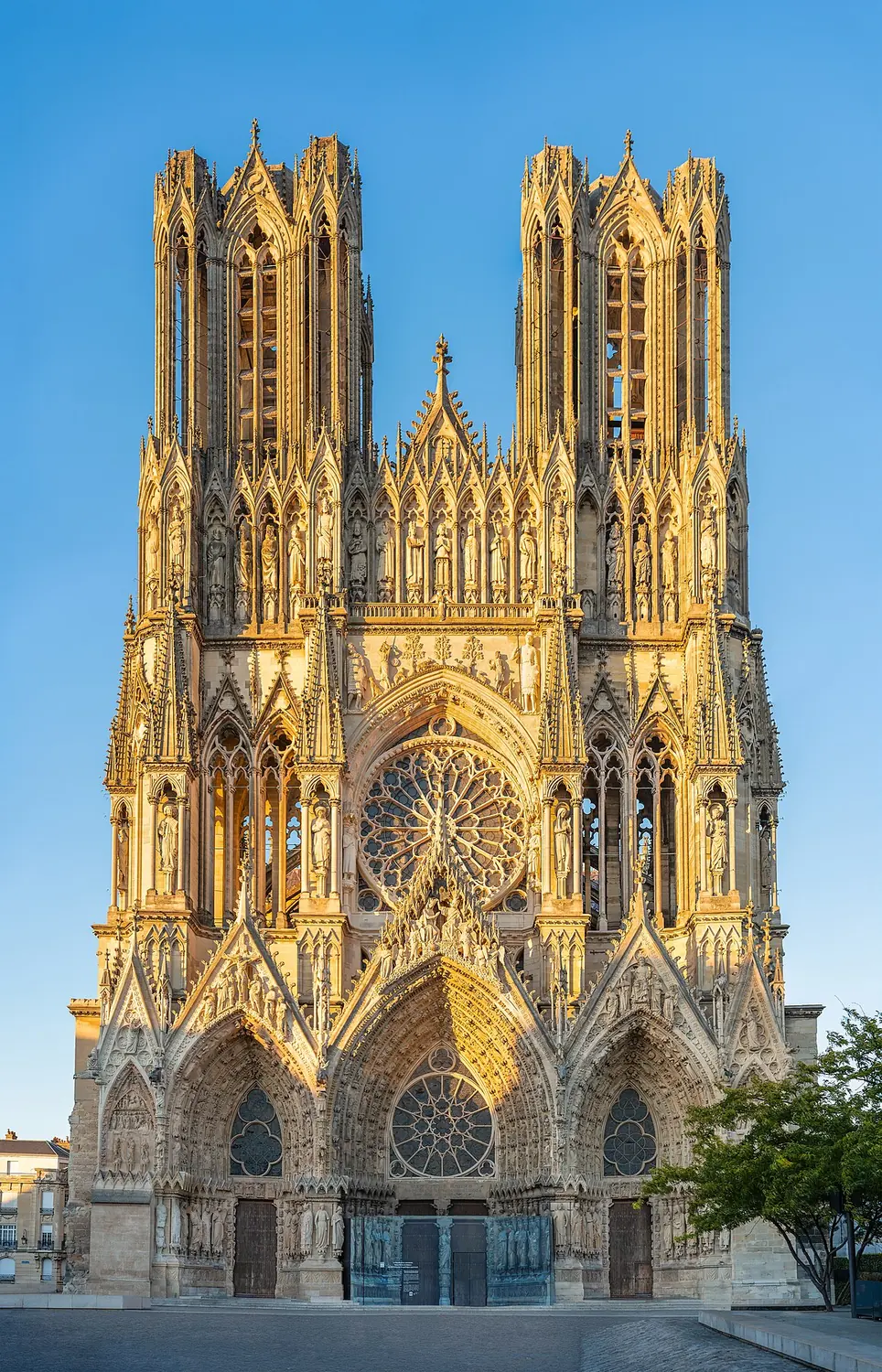
Photo: Gennadii Saus i Segura — CC BY-SA 4.0 — Wikimedia Commons
Reims Cathedral
Where the kings were crowned
It was in Reims that Bishop Remigius baptised Clovis, around 496-499. In memory of this baptism, most kings of France were crowned there from the 11th century: some thirty coronations, up to that of Charles X in 1825. The most famous is that of Charles VII in 1429, in the presence of Joan of Arc.
The present Gothic cathedral was begun in 1211. Its façade has more than two thousand statues, including the famous “Smiling Angel”. Badly damaged by shelling in 1914, it was restored and is a UNESCO World Heritage Site.
This big cathedral is where the kings were crowned. Joan of Arc came here with Charles VII. On the front, look for the “Smiling Angel”: a statue that has been smiling for 800 years!
 Clovis I
 Louis VII
 Charles VII
 Louis XIV
 Louis XVI
 Charles X
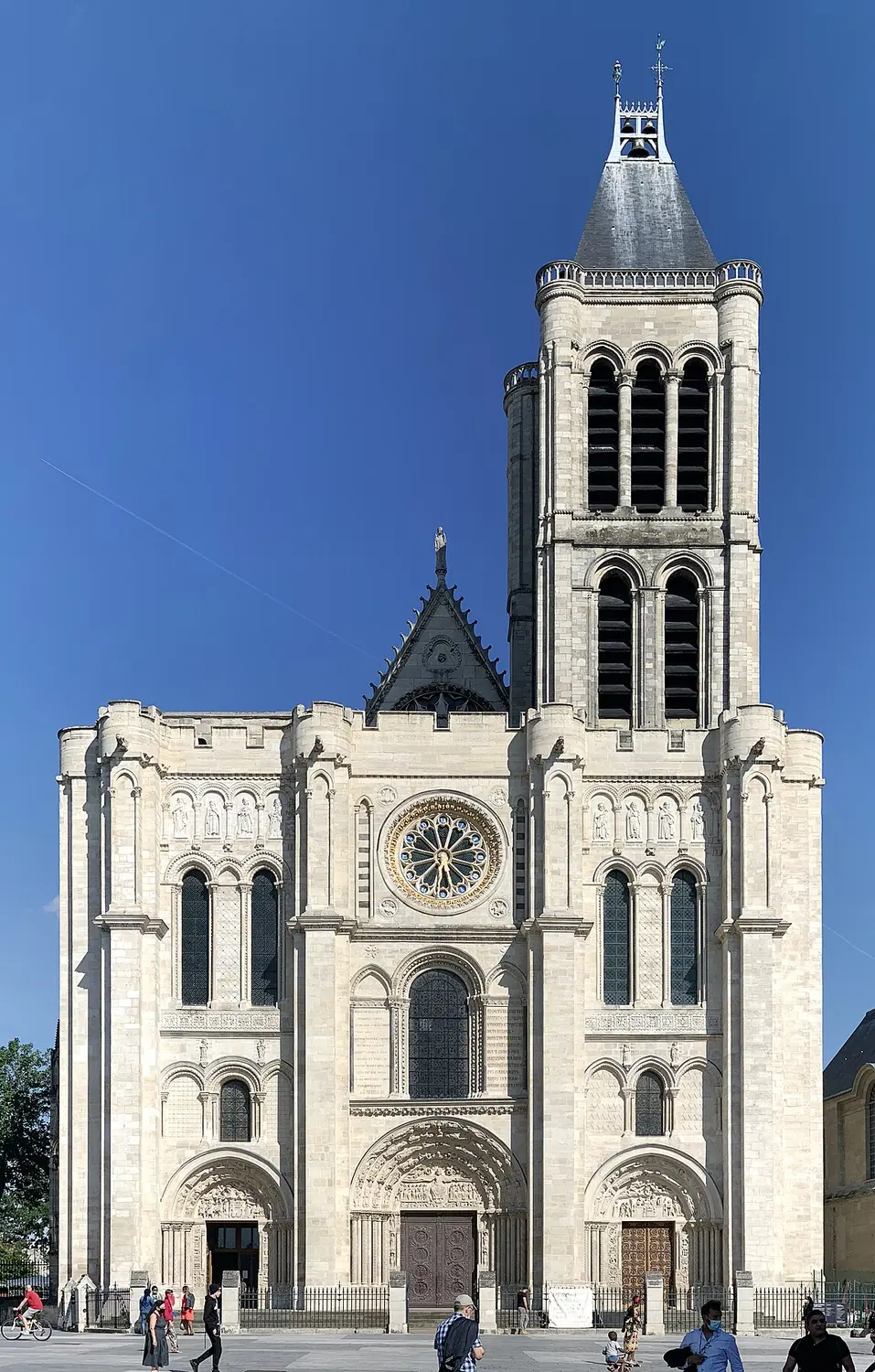
Photo: Chabe01 — CC BY-SA 4.0 — Wikimedia Commons
The basilica of Saint-Denis
The burial place of the kings of France
North of Paris, the abbey of Saint-Denis was built over the tomb of Saint Denis, the first bishop of Paris. Dagobert I was buried there in 639, then most of the kings after him. Today it holds more than seventy tomb effigies and tombs of kings, queens and princes.
In the 12th century Abbot Suger, adviser to Louis VI and Louis VII, had the first great Gothic choir built there, flooded with light. In 1793 the tombs were opened and the remains thrown into pits; in 1817 Louis XVIII had them gathered in the crypt, where Louis XVI and Marie Antoinette also rest.
It is the “kings’ cemetery”: almost all the kings and queens of France were buried here. On their tombs you can see them lying down with their hands joined, often with a little dog or a lion at their feet.
 Dagobert I
 Louis IX
 Louis XII
 Henry II
 Marie Antoinette
Public domain — Wikimedia Commons
The Palais de la Cité
The kings’ first palace in Paris
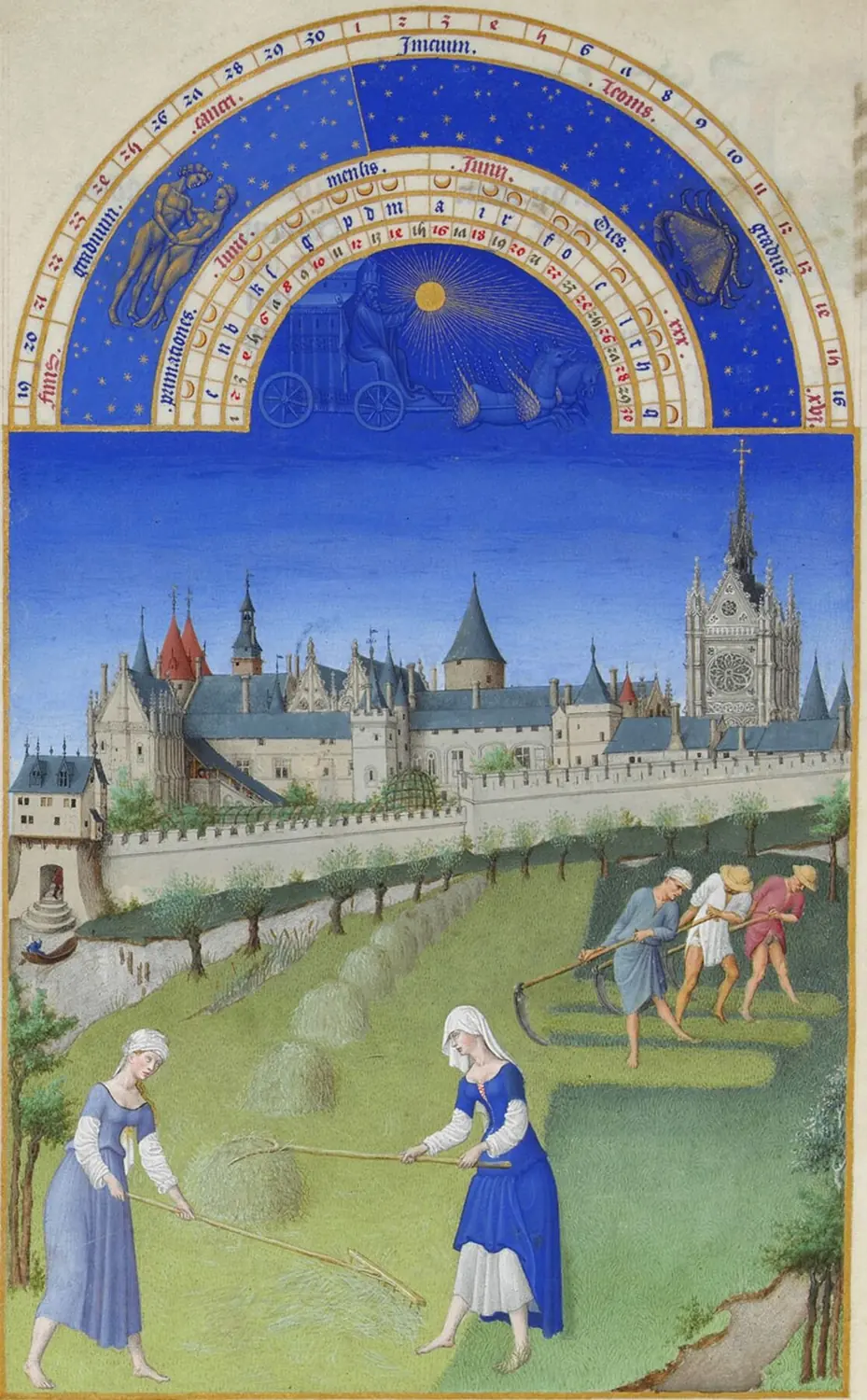
On the Île de la Cité, in the heart of Paris, the royal palace was the kings’ main residence from the 10th to the 14th century. Saint Louis had the Sainte-Chapelle built there (consecrated in 1248) to house Christ’s Crown of Thorns, and Philip the Fair enlarged it with a huge great hall.
After the Paris revolt of 1358, Charles V moved to the Louvre and the Hôtel Saint-Pol. The palace became the seat of the Parlement and of justice; part of it served as a prison, the Conciergerie, where Marie Antoinette was held in 1793. Today you can visit the Sainte-Chapelle and the Conciergerie.
Before the Louvre and Versailles, the kings lived on an island in the middle of Paris, the Île de la Cité. Saint Louis built the Sainte-Chapelle there, a church whose walls are almost entirely stained glass.
 Philip IV
 Charles V
Public domain — Wikimedia Commons
The Louvre
From fortress to palace, then to museum
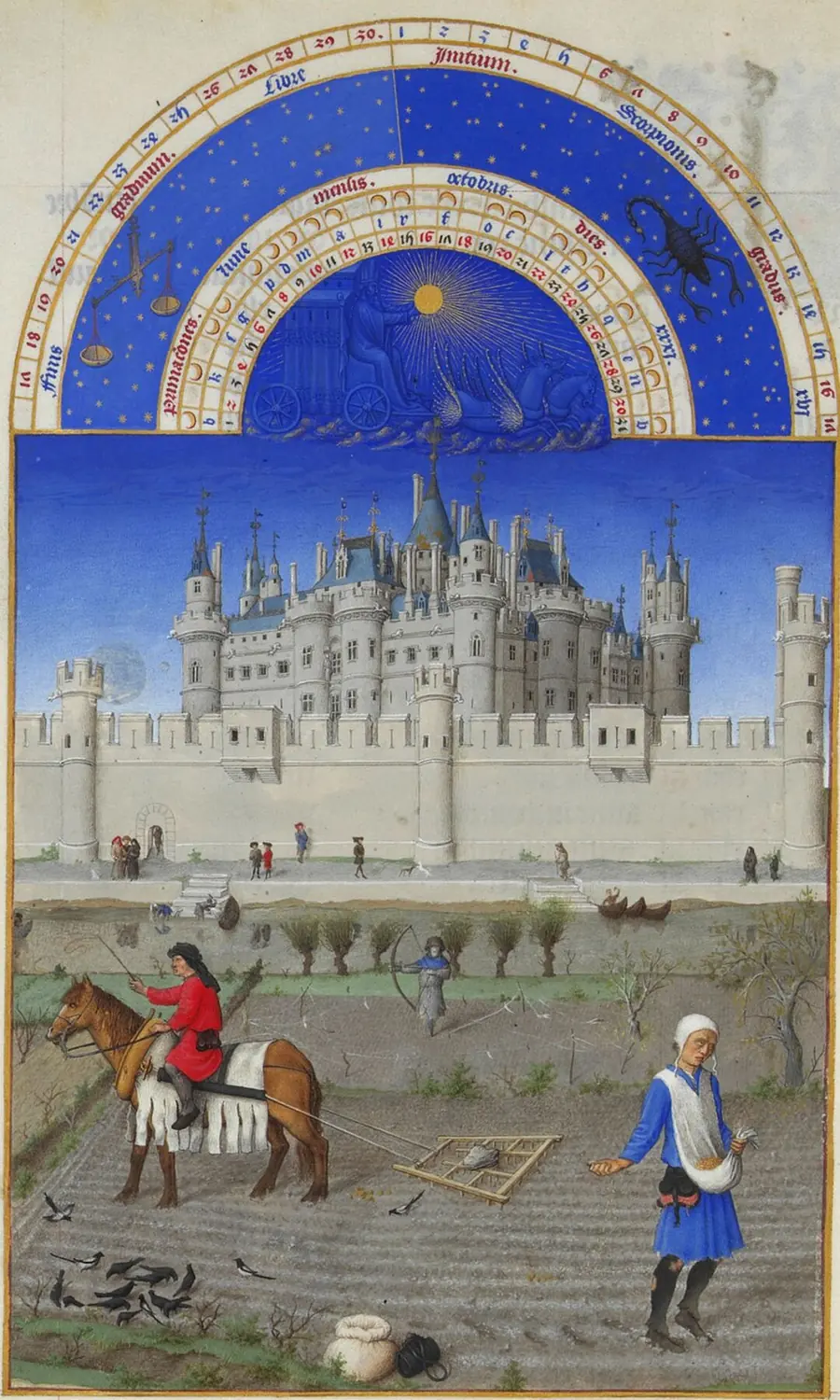
Around 1190 Philip Augustus built the Louvre, a fortress protecting Paris to the west. Charles V turned it into an elegant residence and installed his library there. From 1546, Francis I then Henry II began replacing it with a Renaissance palace.
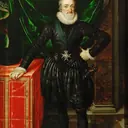
Henry IV linked it to the Tuileries Palace by the Grand Gallery, along the Seine. When Louis XIV left for Versailles, the Louvre housed the academies and the royal collections. It became a museum in 1793, today the most visited in the world. In the basement you can still see the foundations of Philip Augustus’s castle.
Before it became a museum, the Louvre was a castle, then the kings’ palace. In the basement you can still see the walls of the castle built more than 800 years ago by Philip Augustus.
 Philip II Augustus
 Francis I
 Henry IV
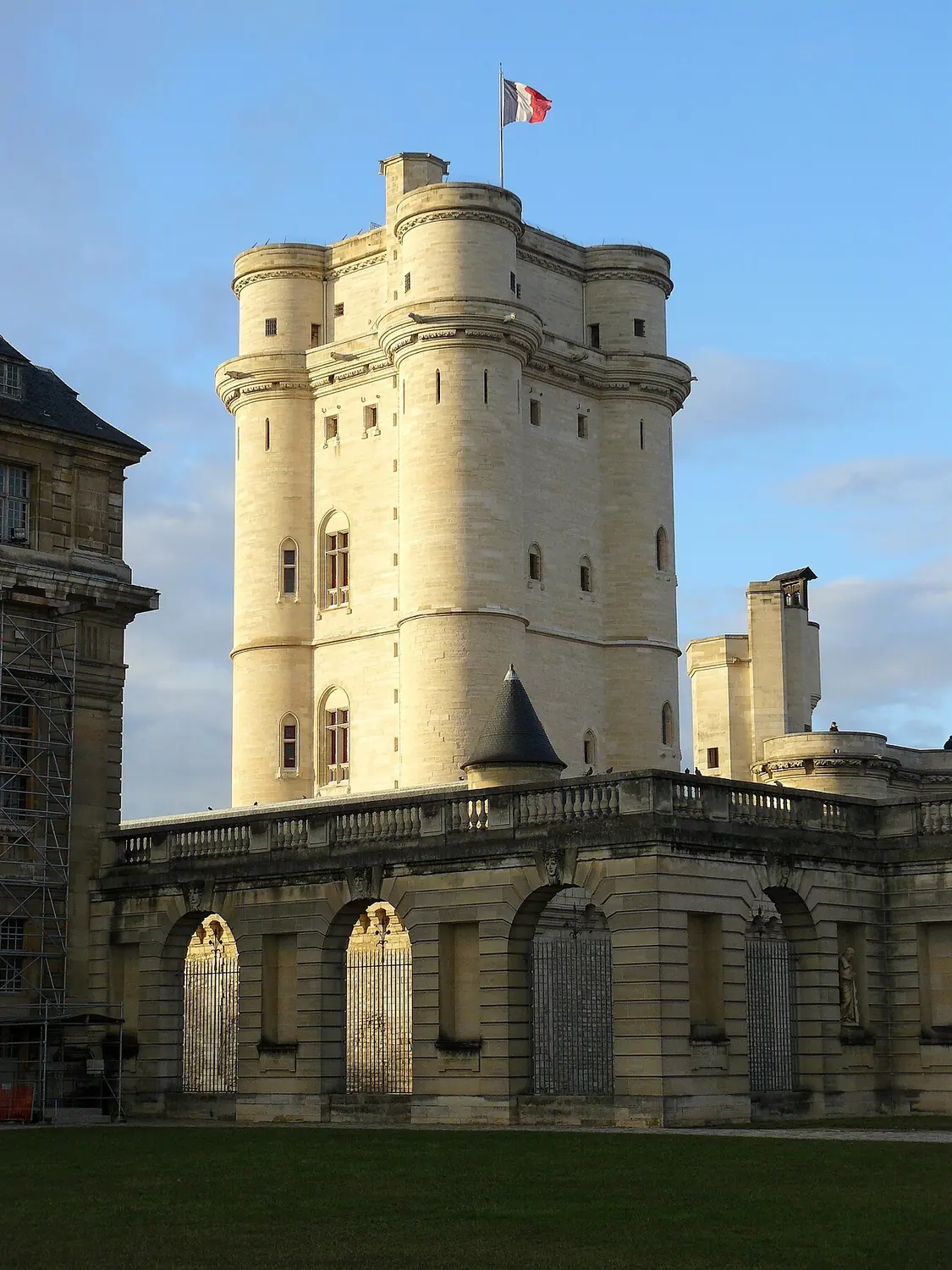
Photo: Siren-Com — CC BY-SA 3.0 — Wikimedia Commons
The Château de Vincennes
The tallest keep in Europe
East of Paris, Vincennes was first a hunting manor in the middle of the woods. Saint Louis liked to stay there; the legend of the king dispensing justice under an oak is said to have been born there. Louis X and Charles IV died there.
Charles V built a 50-metre keep there, the tallest in Europe, then a wall large enough to house his whole court and his administration. Later the château served as a prison, an arsenal and barracks. The Sainte-Chapelle of Vincennes, begun by Charles V, was completed in the 16th century.
The keep of Vincennes is a tower 50 metres high, as tall as a 16-storey building! King Charles V kept his treasures and books there. It was near here that Saint Louis is said to have judged people under an oak tree.
 Louis X
 Charles IX
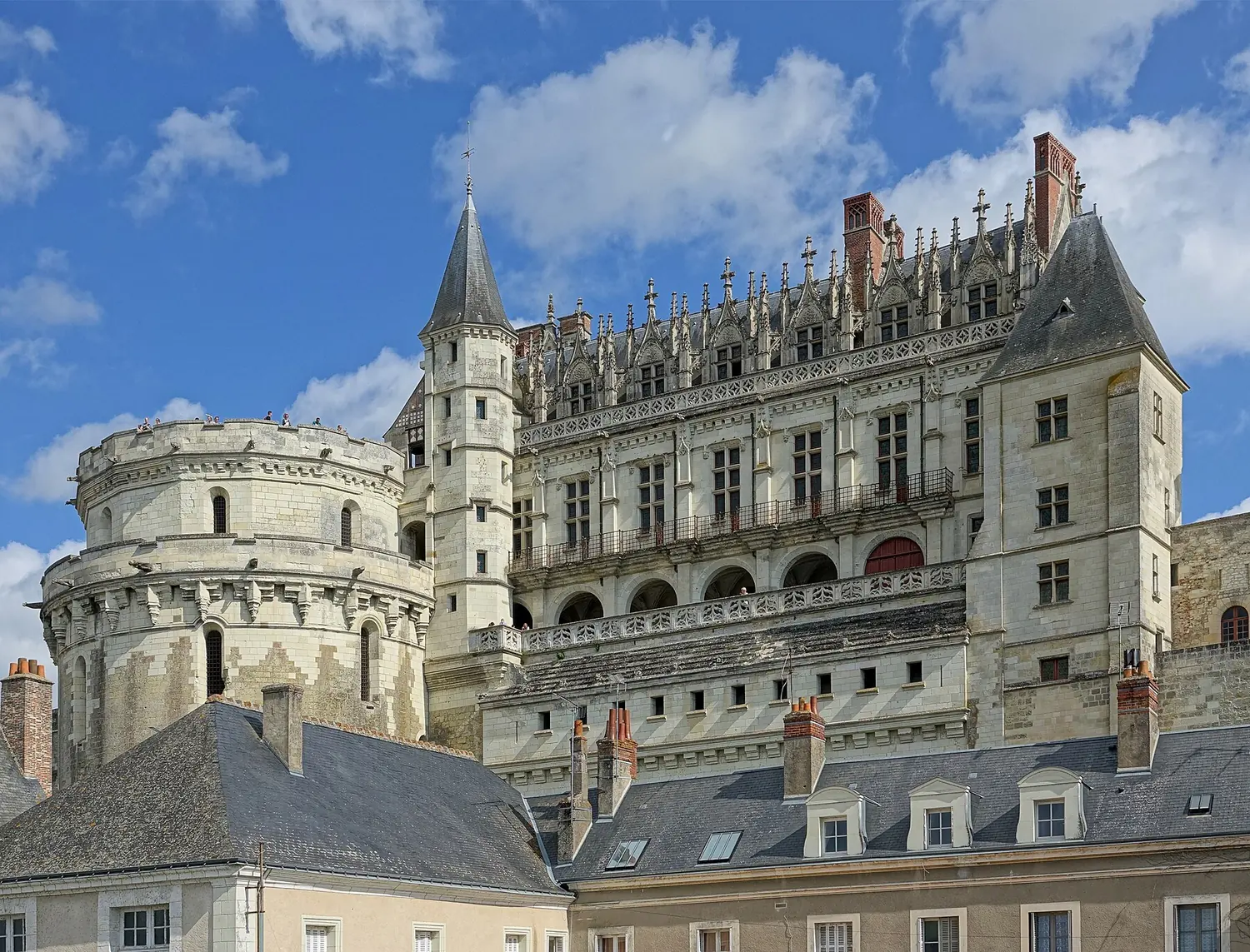
Photo: Gzen92 — CC BY-SA 4.0 — Wikimedia Commons
The Château d’Amboise
The château of Charles VIII and Leonardo da Vinci
Perched above the Loire, Amboise was Charles VIII’s childhood home. Back from Italy full of wonder, he transformed it with Italian artists and gardeners: it is one of the first Renaissance châteaux in France. He died there in 1498 after hitting his head on a door lintel.
Francis I spent his youth there and invited Leonardo da Vinci, who settled close by, at Clos Lucé, in 1516. The great artist died in 1519; his presumed remains rest in the château’s Saint-Hubert chapel. In 1560 Amboise was the scene of the Amboise conspiracy, a Protestant plot that was harshly put down.
This is the château where King Charles VIII hit his head on a door… and died of it! Francis I grew up here, and his friend Leonardo da Vinci is believed to be buried in the château’s little chapel.
 Charles VIII
 Louis XI
 Anne of Brittany
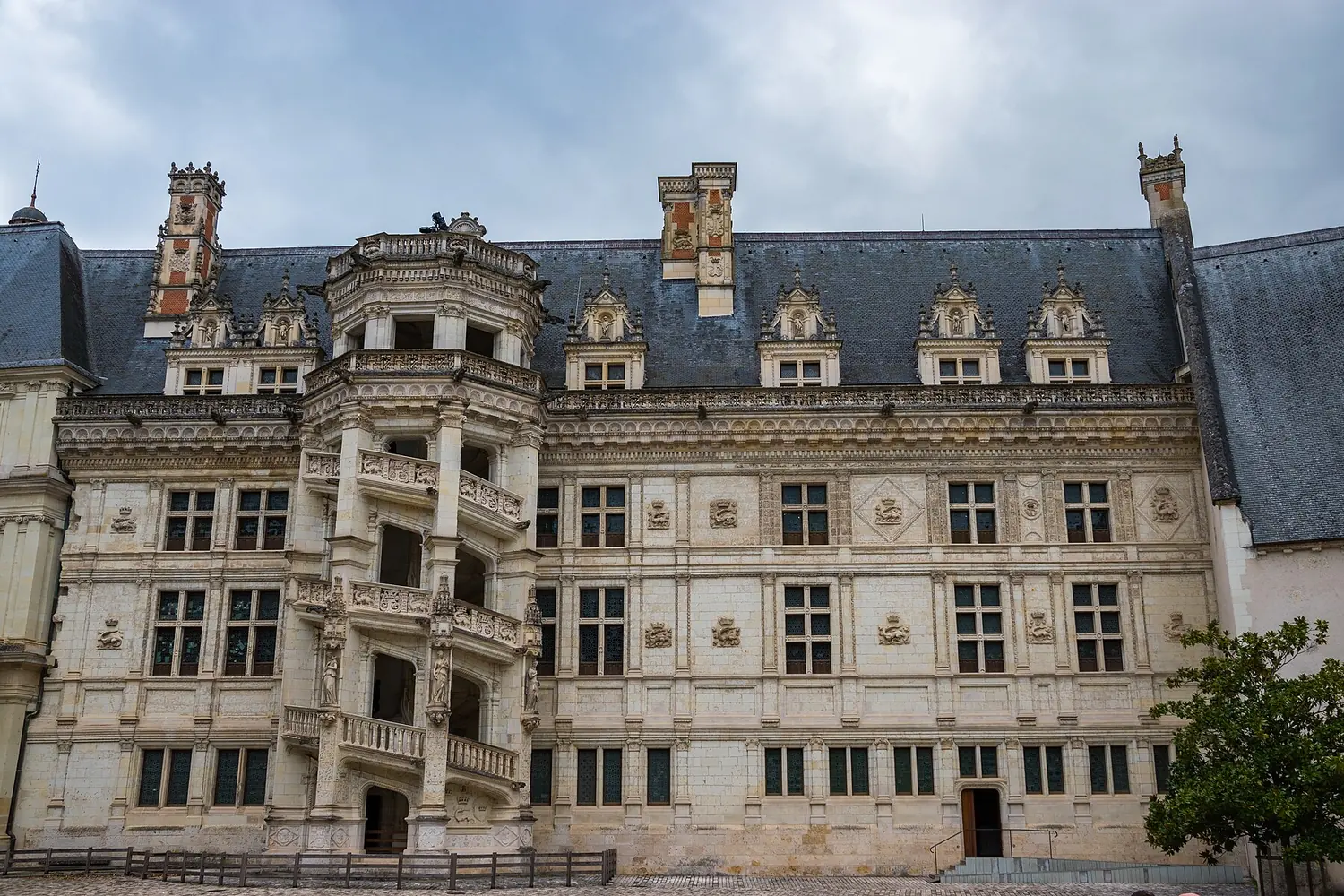
Photo: Arrnicel — CC BY-SA 4.0 — Wikimedia Commons
The Château de Blois
Four centuries of architecture around one courtyard
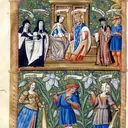
Louis XII, born at Blois, made it the court’s main residence around 1500, with his red-brick wing. Francis I added a Renaissance wing and its famous spiral staircase open onto the courtyard, decorated with salamanders. Later Gaston of Orléans, brother of Louis XIII, had a classical wing built by François Mansart.
It was at Blois that Catherine de’ Medici died in 1589, a few days after the murder, on Henry III’s orders, of the Duke of Guise, leader of the Catholic League, on 23 December 1588.
In the courtyard of the Château de Blois you can see four different styles, as if four architects had each built one side! Look for the big spiral staircase decorated with salamanders, Francis I’s animal.
 Claude of France
 Catherine de’ Medici
 Henry III
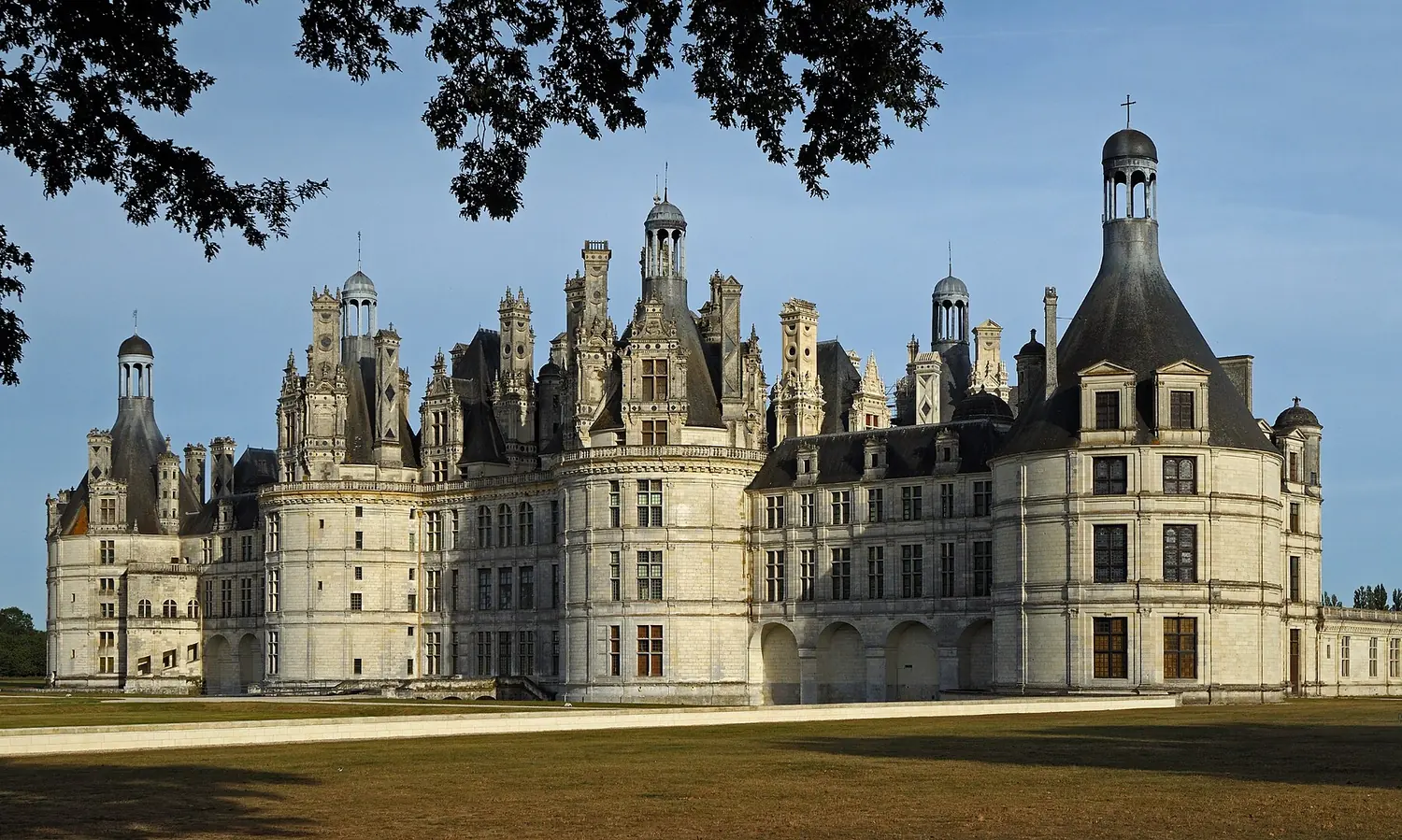
Photo: Ввласенко — CC BY-SA 3.0 — Wikimedia Commons
The Château de Chambord
Francis I’s dream in stone
Francis I began Chambord in 1519, in the middle of a vast forest full of game, in Sologne. It was not a permanent residence but a hunting and prestige château, meant to impress visitors, such as Emperor Charles V, received in 1539.
Its famous double-helix staircase lets two people go up and down without meeting; it may have been inspired by Leonardo da Vinci’s ideas. The roofs form a real town of chimneys, turrets and lanterns. Louis XIV had Molière’s “The Bourgeois Gentleman” performed there in 1670.
Chambord has more than 400 rooms and a magic staircase: two people can climb it at the same time without ever meeting! On the roof there are so many chimneys and little towers that it looks like a town.
Public domain — Wikimedia Commons
The Palace of Fontainebleau
“The true home of kings, the house of the centuries”
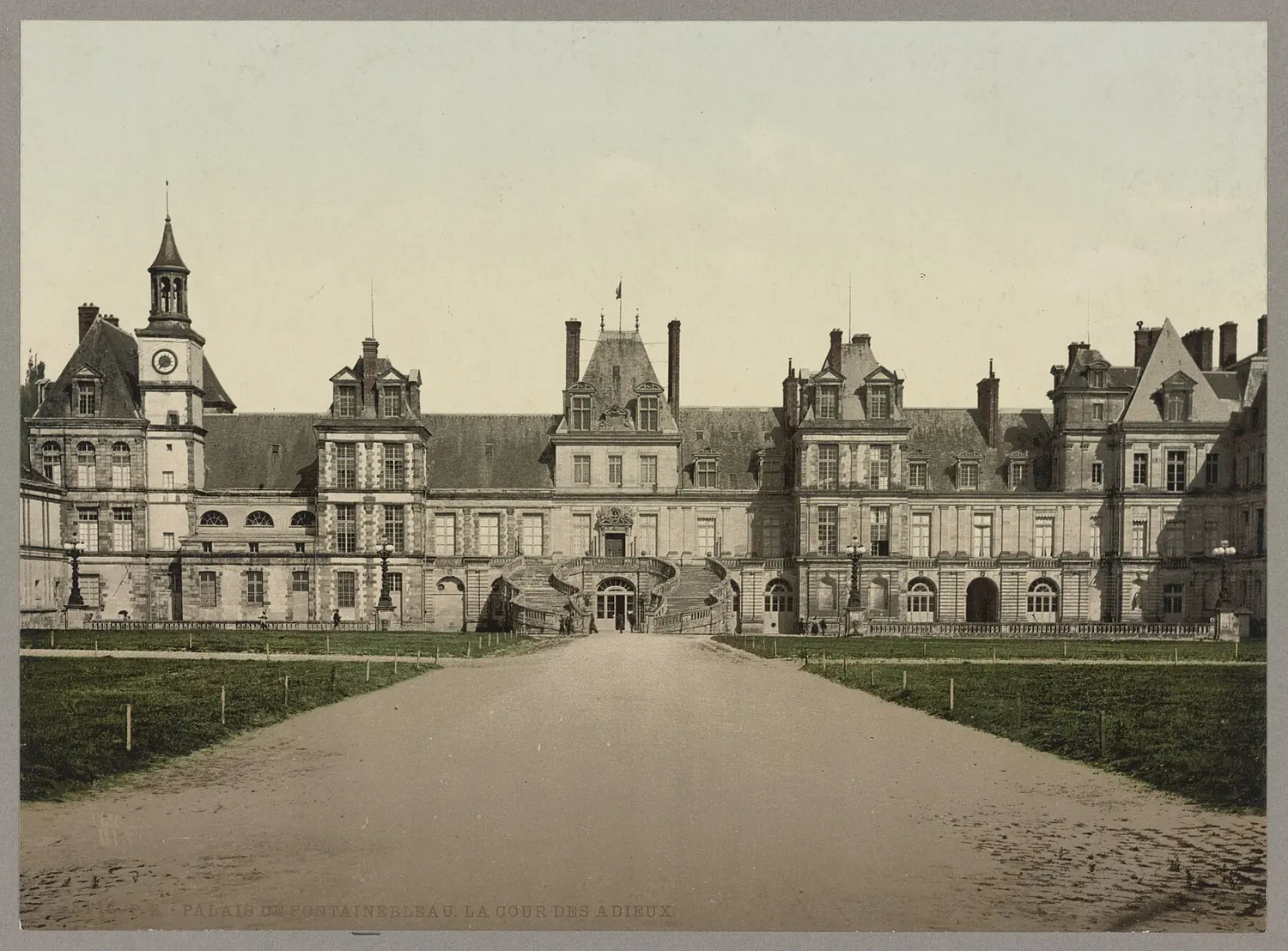
A hunting residence since the 12th century, Fontainebleau was lived in by almost every ruler, from Louis VII to Napoleon III. Philip the Fair and Louis XIII were born there. Francis I rebuilt it and brought Italian artists, including Rosso and Primaticcio: the Francis I Gallery is a masterpiece of the Renaissance.
It was in the White Horse Courtyard, since called the Courtyard of Farewells, that Napoleon I bade farewell to his Guard before leaving for the island of Elba on 20 April 1814. On Saint Helena he is said to have called Fontainebleau “the true home of kings, the house of the centuries”.
Fontainebleau is the château where almost all the kings lived, for more than 700 years. In this courtyard Napoleon said goodbye to his soldiers before going into exile on the island of Elba.
 Louis XIII
 Napoleon I
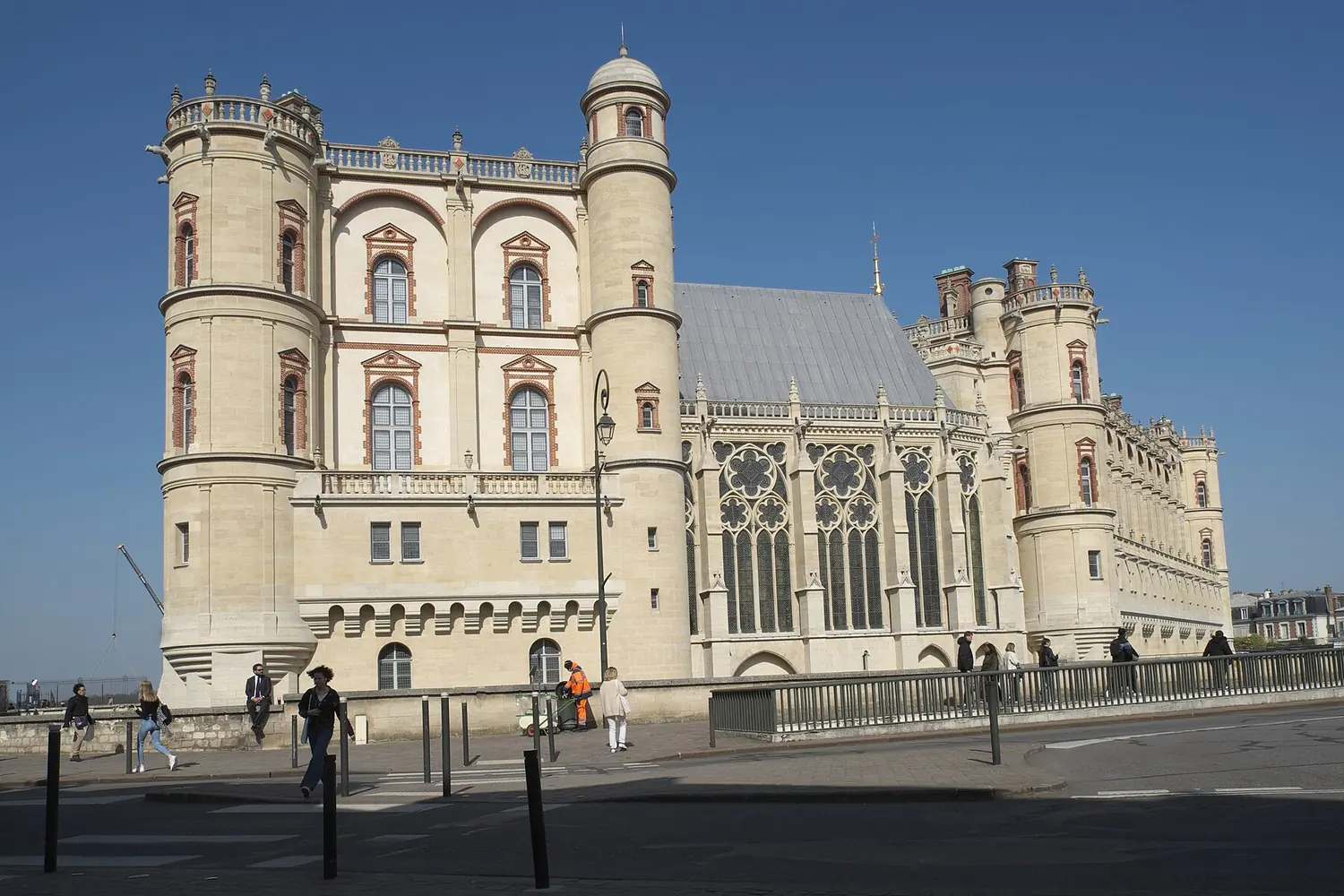
Photo: GFreihalter — CC BY-SA 4.0 — Wikimedia Commons
The Château de Saint-Germain-en-Laye
The château where Louis XIV was born
Saint Louis built a Gothic chapel at Saint-Germain that still exists. Francis I rebuilt the château in brick and stone in the 16th century, and his successors added a terraced “New Château” above the Seine, now almost entirely destroyed.
Louis XIV was born there in 1638 and lived there with his court until 1682, when he settled permanently at Versailles. The château then became the residence of the exiled king of England, James II. Today it houses the National Archaeology Museum.
Louis XIV, the future Sun King, was born in this château in 1638. He lived here for years before moving to Versailles with his whole court.
Public domain — Wikimedia Commons
The Palace of Versailles
The Sun King’s palace
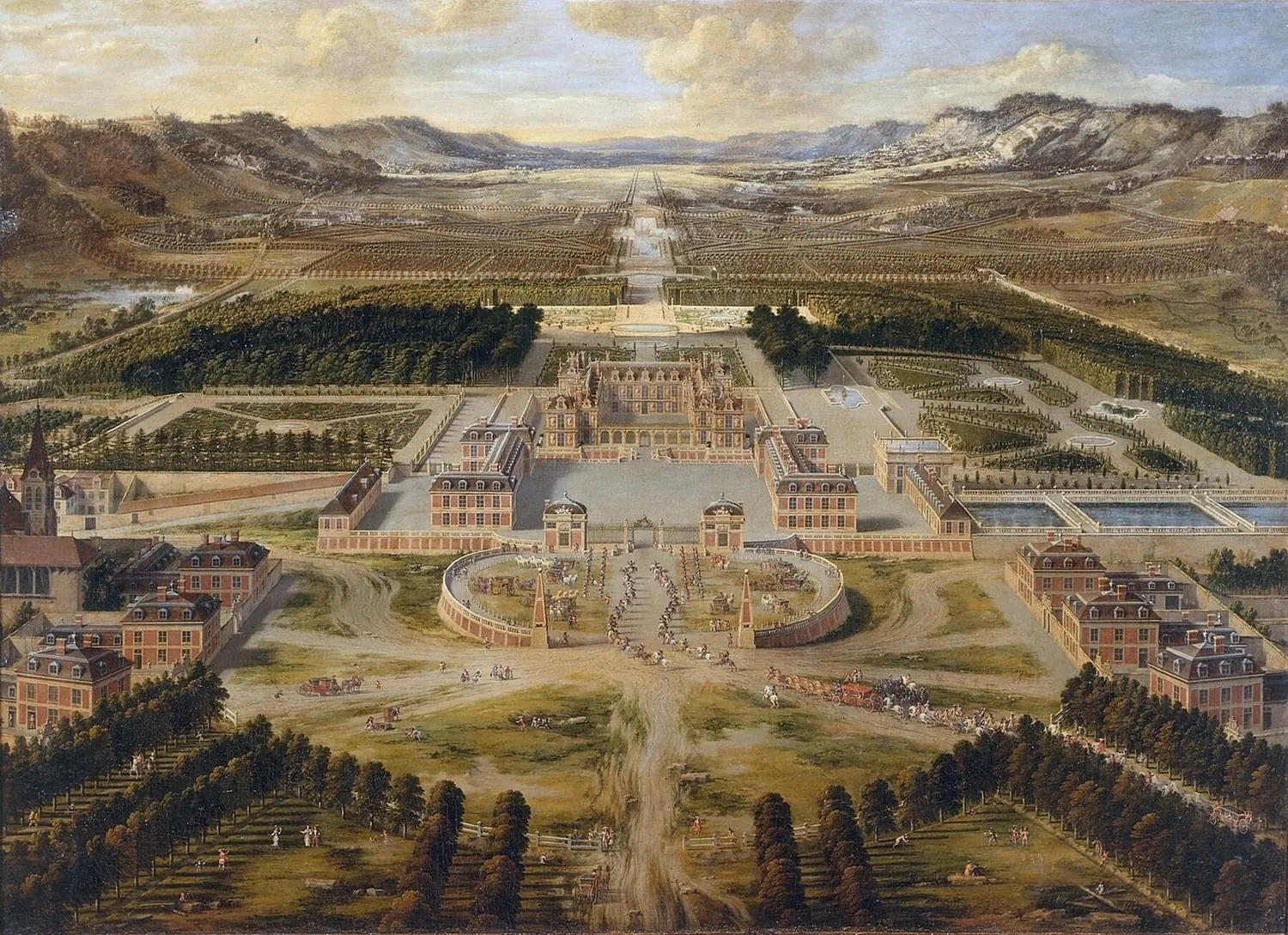
Louis XIII had a small hunting lodge built at Versailles. From 1661 Louis XIV turned it into a huge palace, with gardens designed by André Le Nôtre, and settled there with the court and the government in 1682. The Hall of Mirrors, completed in 1684, celebrates his glory.
Until the Revolution, Versailles was the centre of power: thousands of courtiers lived there under very strict etiquette. On 6 October 1789 the crowd took the royal family back to Paris. Louis Philippe later turned the palace into a museum of French history, for which many of the kings’ portraits on this site were painted.
Versailles is the most famous palace in the world! Louis XIV lived there with thousands of people. The Hall of Mirrors has 357 mirrors. And the gardens are so big you can walk in them all day.
 Louis XV
 Louis Philippe I
CC0 — Wikimedia Commons
The Tuileries Palace
The vanished palace
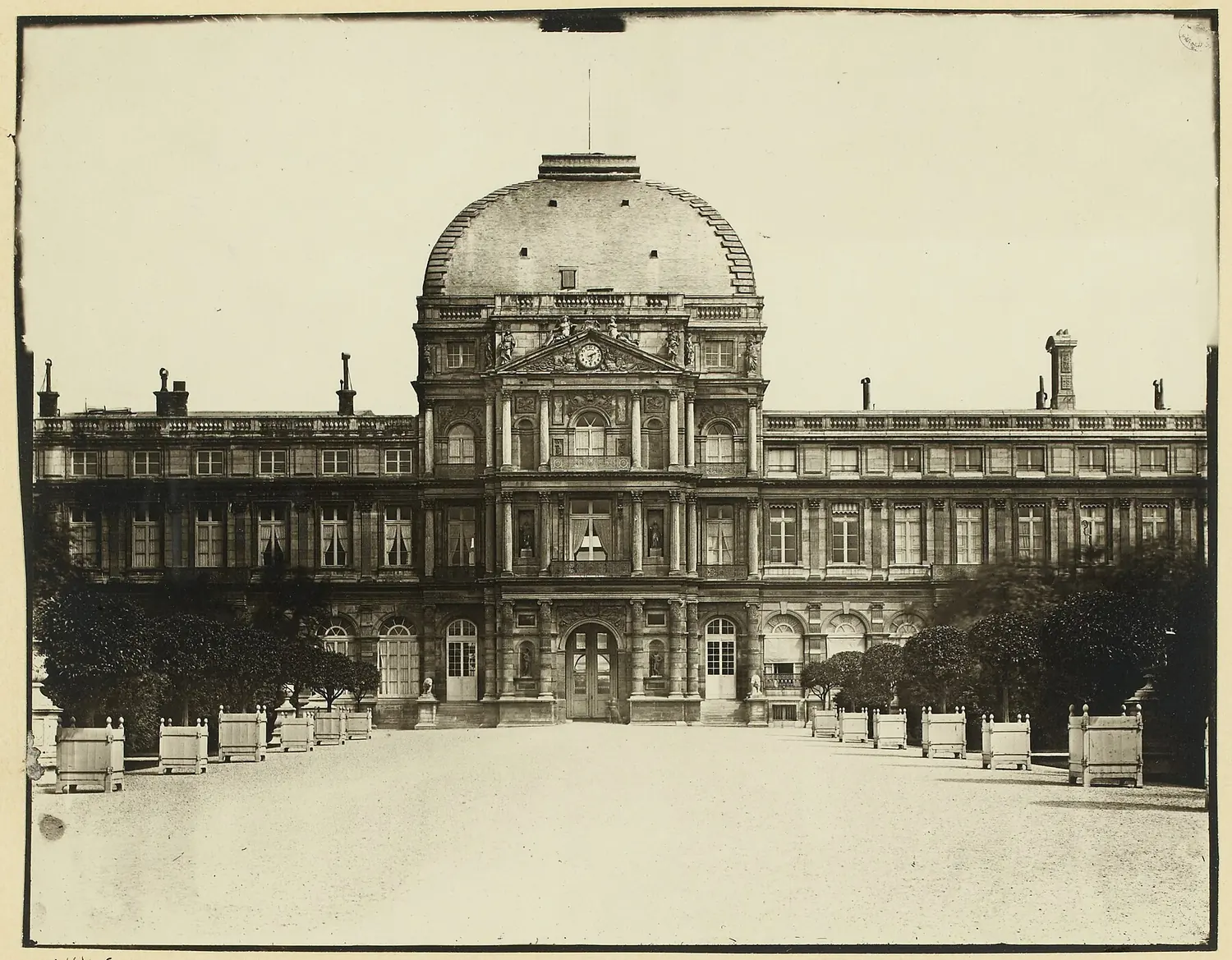
In 1564 Catherine de’ Medici had a palace built on the site of old tile works (tuileries), hence its name. Linked to the Louvre, it became Louis XVI’s residence from October 1789. On 10 August 1792 the Tuileries were stormed: it was the end of the monarchy.
Napoleon I, then the kings of the Restoration, Louis Philippe and Napoleon III lived there. In May 1871, during the Paris Commune, the palace was set on fire; its ruins were razed in 1883. Only the gardens remain, open to the public.
Once upon a time there was a great palace between the Louvre and the Tuileries Gardens. Kings and emperors lived there… until it was burned in 1871. Today only the gardens are left.
 Napoleon III
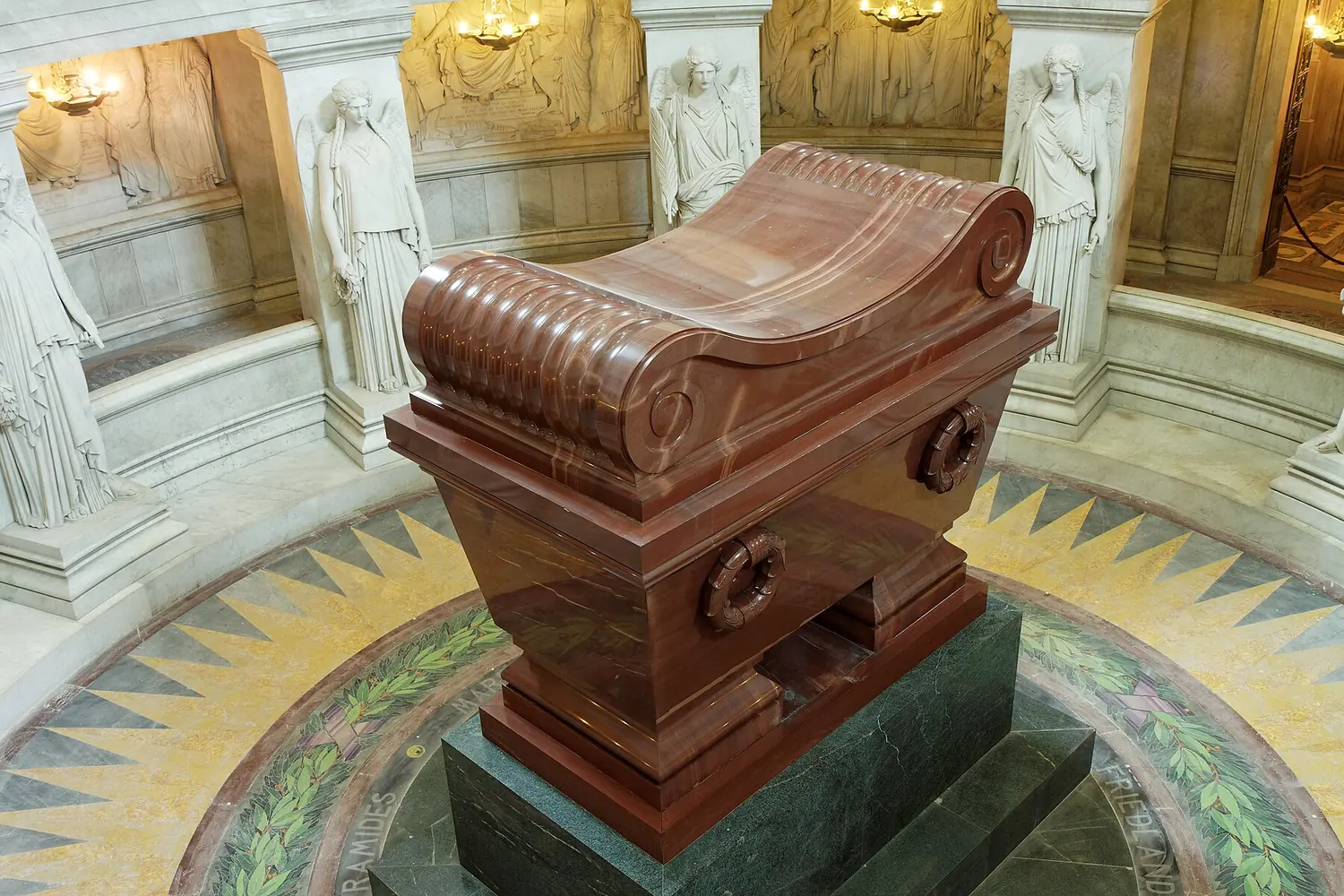
Photo: Thesupermat — CC BY-SA 3.0 — Wikimedia Commons
Les Invalides
The soldiers’ home and Napoleon’s tomb
In 1670 Louis XIV founded the Hôtel des Invalides to house and care for wounded or elderly soldiers. Its church, topped by a golden dome designed by Jules Hardouin-Mansart, is one of the great monuments of Paris.
In 1840 Louis Philippe obtained from the British the return of the remains of Napoleon, who had died on Saint Helena in 1821. Since 1861 the emperor has rested under the dome, in a huge tomb of red quartzite. The Army Museum now occupies the buildings.
Louis XIV had the Invalides built to care for his wounded soldiers. Under the big golden dome is Napoleon’s tomb: an enormous coffin of red stone.