Bonaparte
Two emperors, Napoleon I and his nephew Napoleon III, who came to power by a coup and were then confirmed by plebiscites.
The Bonapartes were a family of minor Corsican nobility. Napoleon Bonaparte, a victorious general of the Revolution, seized power in the coup of 18 Brumaire (1799), then was crowned Emperor of the French at Notre-Dame in 1804. He reorganised France (Civil Code, prefects, lycées) and dominated Europe before being defeated in 1814 and then at Waterloo in 1815.
His son, Napoleon II, never reigned. His nephew Louis-Napoléon Bonaparte was elected president of the Republic in 1848, seized power in a coup in 1851 and became Emperor Napoleon III in 1852. The Second Empire modernised the country (railways, the great works in Paris), but collapsed after the defeat at Sedan against Prussia in 1870.
These emperors were not kings: their power did not come from a sacred bloodline but from the will of the people, consulted through plebiscites, even though they wanted to found a dynasty.
The Bonapartes are not kings but emperors. Napoleon I, a small general who became master of Europe, is one of the most famous people in the world. His nephew, Napoleon III, was France’s last monarch.
- Power is confirmed by votes of the people (plebiscites)
- The Civil Code of 1804
- The Napoleonic Wars in Europe
- The Second Empire modernises France
The family tree
Click a name to open the profile. Queens appear under their husbands; grey boxes are family members who did not reign.
The rulers
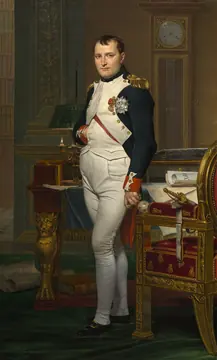 1804–1814, 1799–1804, 1815
Napoleon I
the Little CorporalA Corsican officer trained in the king’s military schools, Napoleon Bonaparte made his name during the Revolution with his victories in Italy. He seized power in a coup in 1799, became First Consul and then Emperor of the French in 1804. He created the Civil Code, the prefects and the lycées, and dominated Europe until the disastrous Russian campaign. Exiled to Elba in 1814, he returned for the Hundred Days, was beaten at Waterloo and died on Saint Helena in 1821.
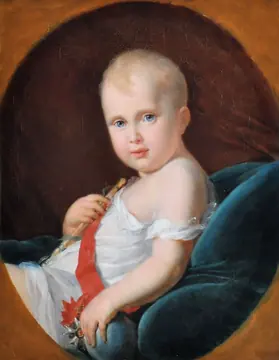 Never reigned
Napoleon II
the Eaglet, the King of RomeThe son of Napoleon and Marie Louise, Napoléon François was born in 1811 and given the title King of Rome. Taken to Austria by his mother in 1814, he grew up there as the Duke of Reichstadt. When his father abdicated for the second time, in June 1815, he was proclaimed emperor, but he never reigned. He died of tuberculosis at Schönbrunn in 1832.
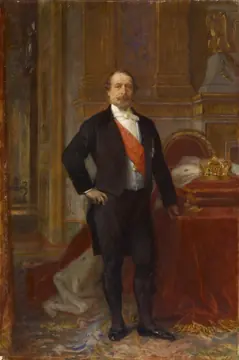 1852–1870, 1848–1852
Napoleon III
Louis-NapoléonA nephew of Napoleon I, Louis Napoléon Bonaparte made two failed coup attempts before being elected President of the Republic in December 1848, by universal male suffrage. Through the coup of 2 December 1851 he took full power, and he became emperor the following year. The Second Empire modernised France, but the war against Prussia brought it down in 1870.
Queens and regents
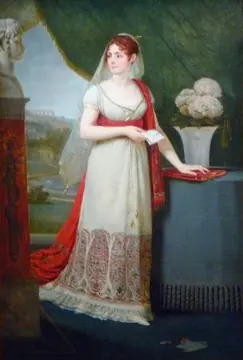 1804–1809
Joséphine de Beauharnais
Empress JoséphineBorn in Martinique, Rose Tascher de La Pagerie first married Viscount Alexandre de Beauharnais, who was guillotined in 1794. She herself narrowly escaped the Terror. In 1796 she married General Bonaparte, who called her Joséphine. Crowned empress in 1804, she was set aside in 1809 because she had not given Napoleon an heir. She died at Malmaison in 1814.
 1810–1814, 1813–1814, 1816–1847
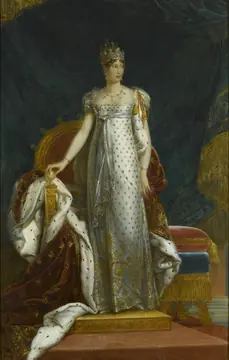
Marie Louise of Austria
The daughter of the Emperor of Austria, Marie Louise married Napoleon in 1810, a few months after his divorce from Joséphine. She gave him a son in 1811, the King of Rome, and served as regent in 1813–1814. After the fall of the Empire she returned to Austria with her son and never saw Napoleon again. She then ruled the Duchy of Parma until her death in 1847.
 1853–1870, 1870
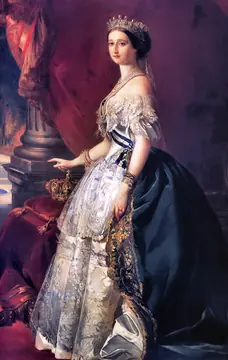
Eugénie de Montijo
Empress EugénieBorn in Granada, Eugénie de Montijo married Napoleon III in 1853. Famous for her elegance, she gave birth to the Prince Imperial in 1856 and acted as regent three times. At the fall of the Empire in 1870 she fled to England. She lost her husband in 1873 and her son in 1879, and died in Madrid in 1920.