The symbols of power
The coronation, the king’s objects, his emblems and his rules: everything that made a man a king in the eyes of his subjects.
Public domain — Wikimedia Commons
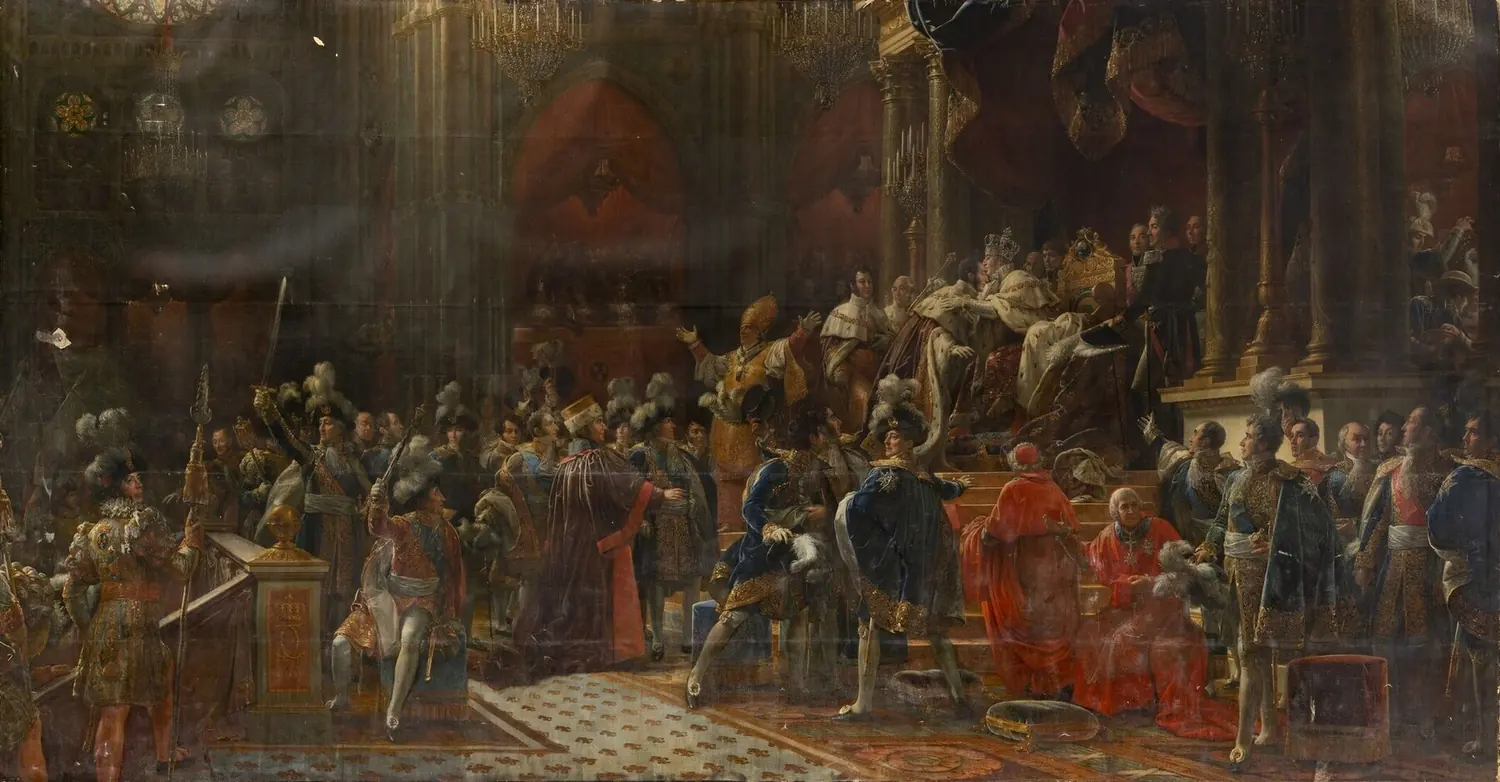
The coronation at Reims
The ceremony that turns an heir into a king “chosen by God”
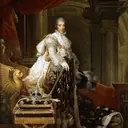
The coronation (sacre) is a religious ceremony: the archbishop anoints the new king with holy oil, like the kings of the Bible, then hands him the objects of power and places the crown on his head. Pepin the Short was the first Frankish king to be anointed, in 751. From the 11th century onwards, almost all kings were crowned at Reims, in memory of Clovis’s baptism by Bishop Remigius.
According to a legend born in the 9th century, a dove brought from heaven the “holy ampulla” containing the oil of Clovis’s baptism. The coronation did not make the king, who was king as soon as his predecessor died, but it made him sacred in the eyes of his subjects. The last coronation took place at Reims in 1825, for Charles X; Napoleon I was crowned emperor at Notre-Dame in Paris in 1804.
The coronation is a big celebration in Reims Cathedral. The new king is anointed with holy oil, then the crown is put on his head. A legend says that a dove brought this oil down from heaven!
 Clovis I
 Pepin the Short
 Louis IX
 Charles VII
 Louis XIV
 Charles X
CC0 — Wikimedia Commons
The crown
The best-known symbol of kingship
For centuries the kings of France were crowned with the so-called “crown of Charlemagne”, kept at the abbey of Saint-Denis. It was melted down during the Revolution, like most of the old coronation objects. Each king could also have his own crown made, decorated with fleurs-de-lis and precious stones.
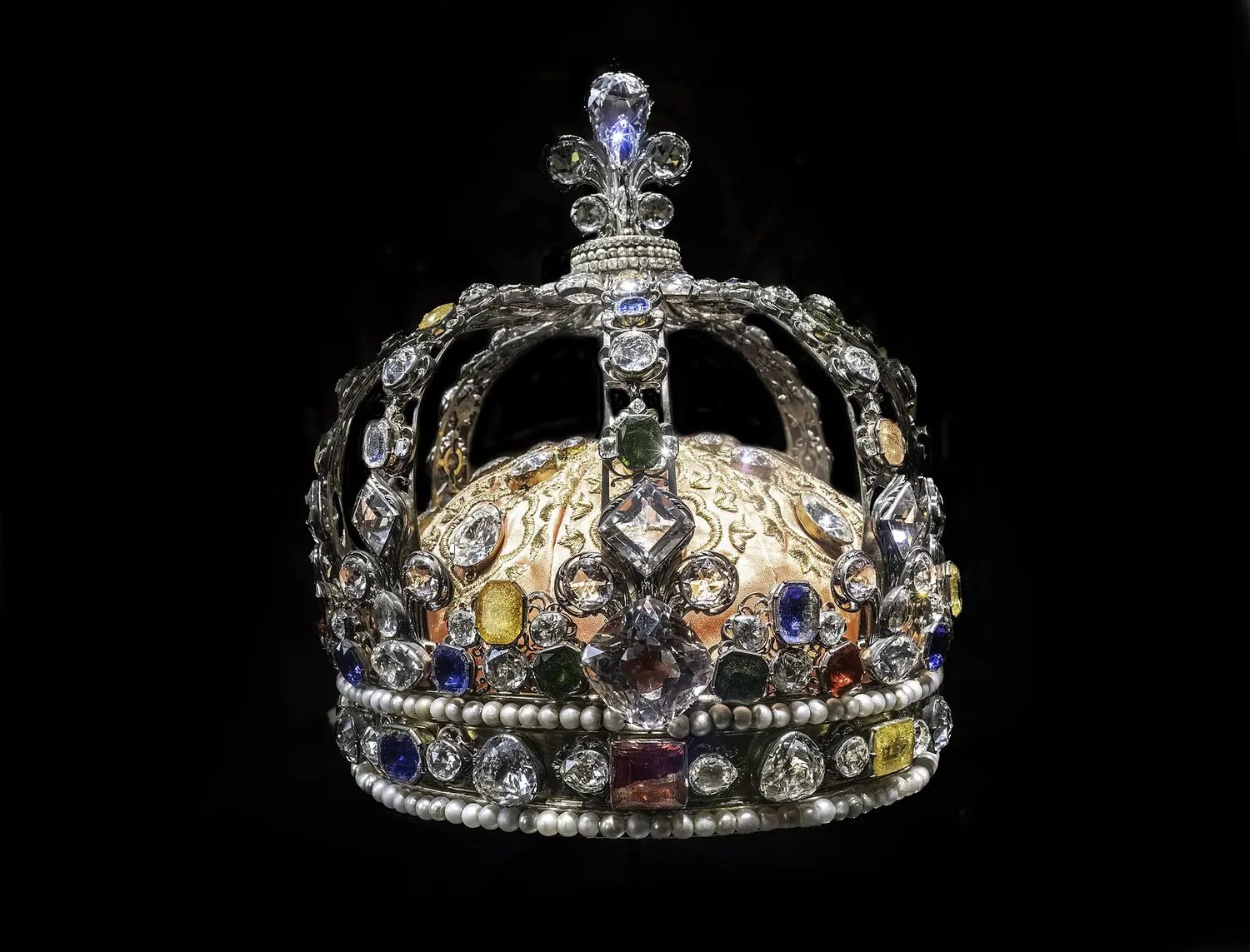
The crown of Louis XV, made in 1722 for his coronation, is the only 18th-century crown of the kings of France to have survived. Its real gems were removed after the ceremony and replaced with copies; it is displayed at the Louvre, in the Apollo Gallery.
The crown shows everyone who the king is. The one made for Louis XV when he was 12 is still in the Louvre. Today its stones are copies: the real ones were removed after the celebration.
 Louis XV
 Napoleon I
Public domain — Wikimedia Commons
The sceptre and the hand of justice
The king’s two staffs: to command and to judge
During the coronation the king received the sceptre in his right hand, the sign of his authority, and the hand of justice in his left, a staff topped by a small ivory hand giving a blessing. It recalled that the king’s first duty was to dispense justice.
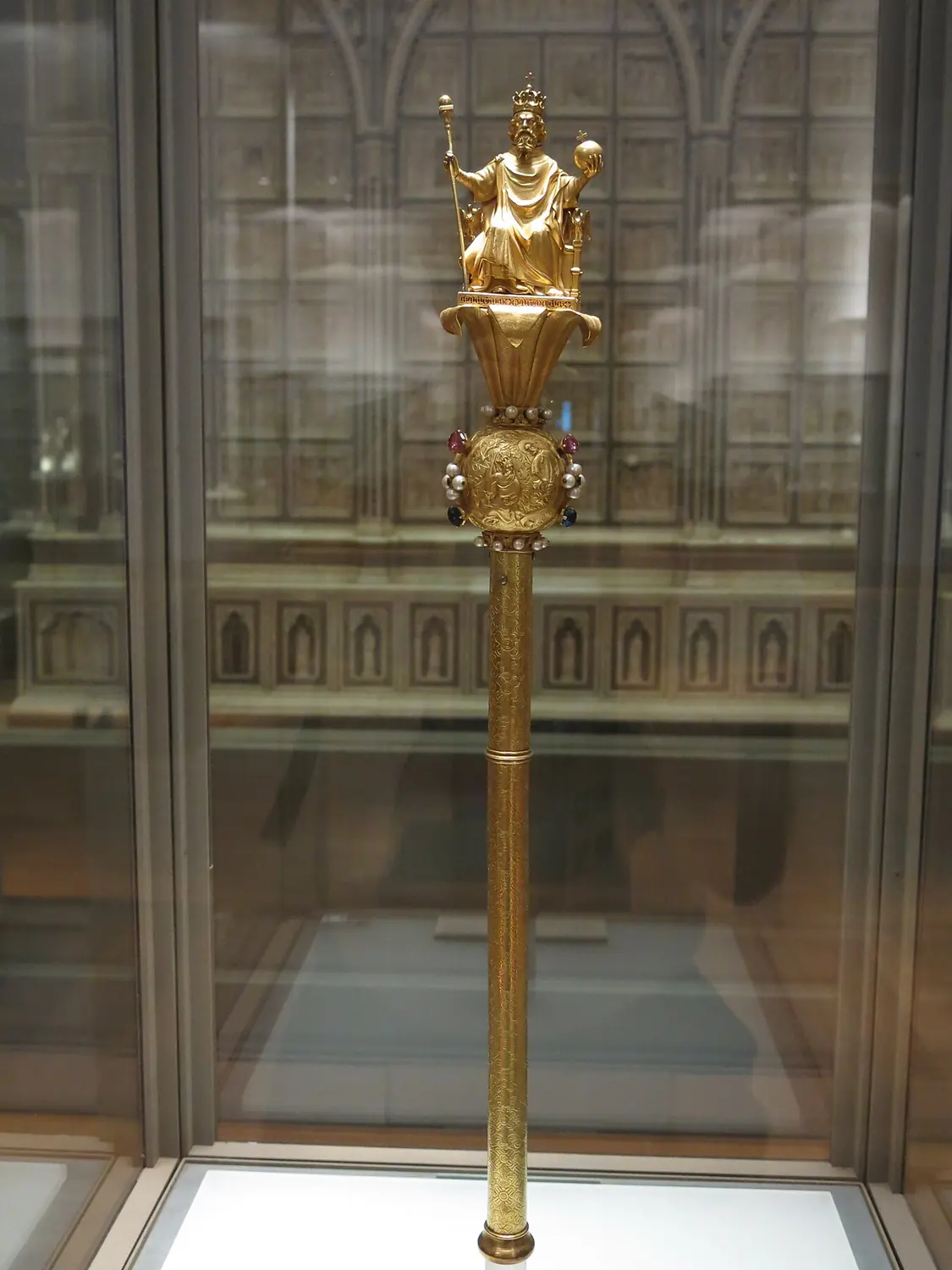
The sceptre made for Charles V around 1364-1380 is topped by a statuette of Charlemagne seated on his throne: the king thus placed himself in the line of the great emperor. It is kept at the Louvre, with other objects from the treasury of Saint-Denis.
The king holds two staffs at his coronation: the sceptre, to show he is in charge, and the hand of justice, which ends in a little hand, to show he must be fair. This one belonged to King Charles V.
 Charles V
 Louis X
CC0 — Wikimedia Commons
Joyeuse, the coronation sword
The so-called sword of Charlemagne
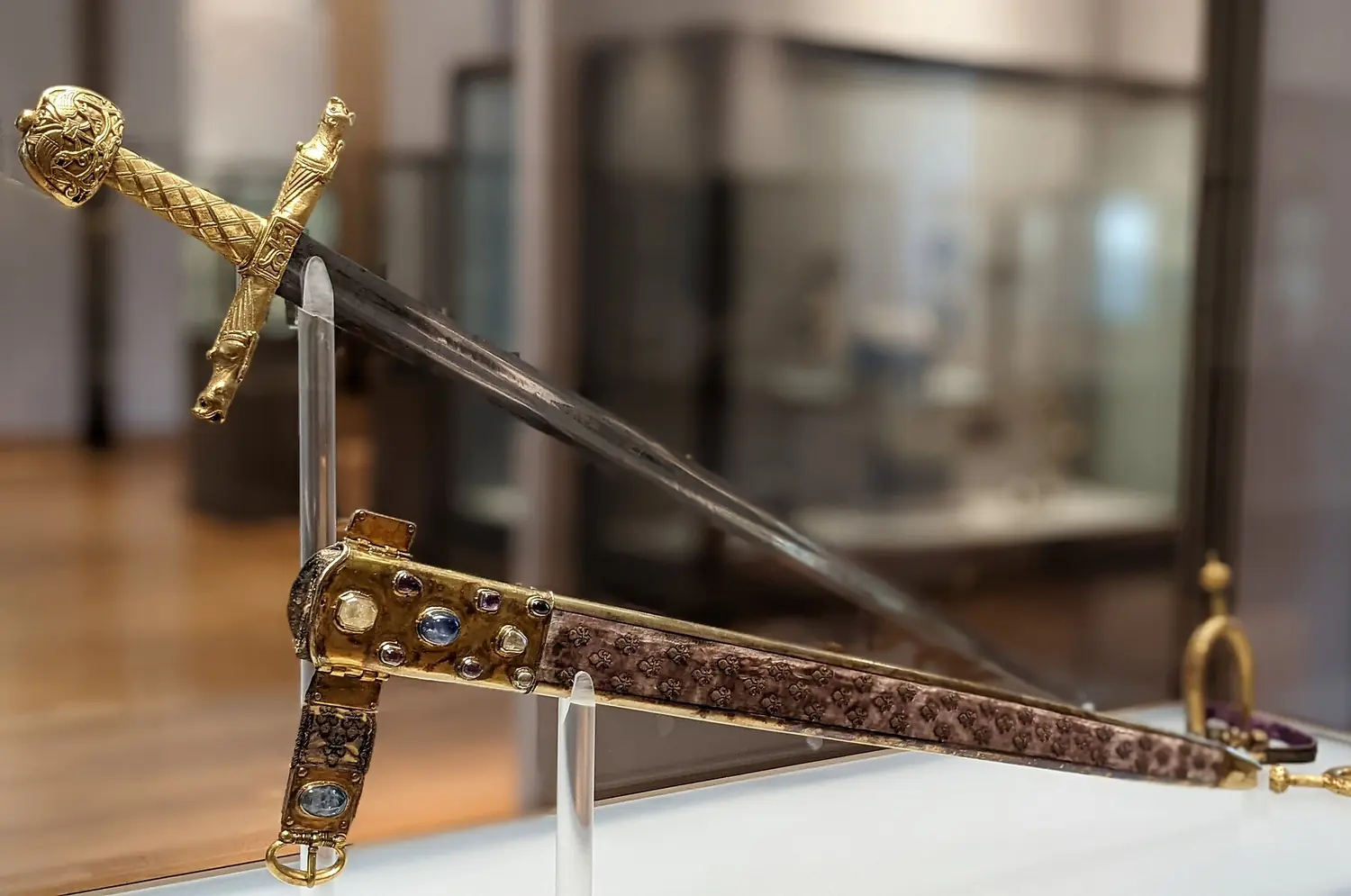
At the coronation the king was made a knight: he received a sword, which he was to use to defend the Church and the kingdom. The coronation sword of the kings of France bears the name Joyeuse, Charlemagne’s legendary sword in the old epic songs.
In reality it was assembled over the centuries: some parts may date from the 10th century, others from the 12th and 13th centuries, and the scabbard was remade for the coronation of Charles X. It was used at royal coronations at least from the 13th century and is now in the Louvre.
Joyeuse is the name of Charlemagne’s magic sword in old legends. Kings received a sword with that name at their coronation. It still exists: you can see it in the Louvre.
 Charlemagne
 Philip II Augustus
The fleur-de-lis
The emblem of the kings of France
The fleur-de-lis is a stylised lily that became the emblem of the kings of France in the 12th century. It symbolises purity, the Virgin Mary and divine protection. The royal arms are “azure semé of fleurs-de-lis or”: a blue field strewn with small golden flowers.
Around 1376 Charles V reduced the number of flowers to three, perhaps in honour of the Trinity. Fleurs-de-lis were everywhere: on coronation robes, seals, coins, flags and royal buildings. Removed by the Revolution, they returned under the Restoration, then disappeared with the monarchy.
The fleur-de-lis is the logo of the kings of France! Three golden flowers on a blue background. You can see it on kings’ robes, châteaux, coins and even on gates and fountains.
 Louis VII
The oriflamme of Saint-Denis
The kings’ red war banner
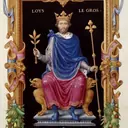
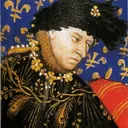
The oriflamme is a red silk banner, cut into points like flames, kept at the abbey of Saint-Denis. From Louis VI, in 1124, the king came to collect it before going to war against an enemy of the kingdom, and had it carried before the army.
Unfurling the oriflamme meant that no prisoners would be taken. It flew notably at Bouvines, during Saint Louis’s crusades and during the Hundred Years’ War. It was brought out for the last time at Agincourt, in 1415, and then disappeared.
The oriflamme is a big red flag shaped like flames. The king took it to war and had it carried at the head of his army. It was kept in the abbey of Saint-Denis, near Paris.
 Louis VI
 Charles VI
Public domain — Wikimedia Commons
Salic law
Why no woman ever reigned over France
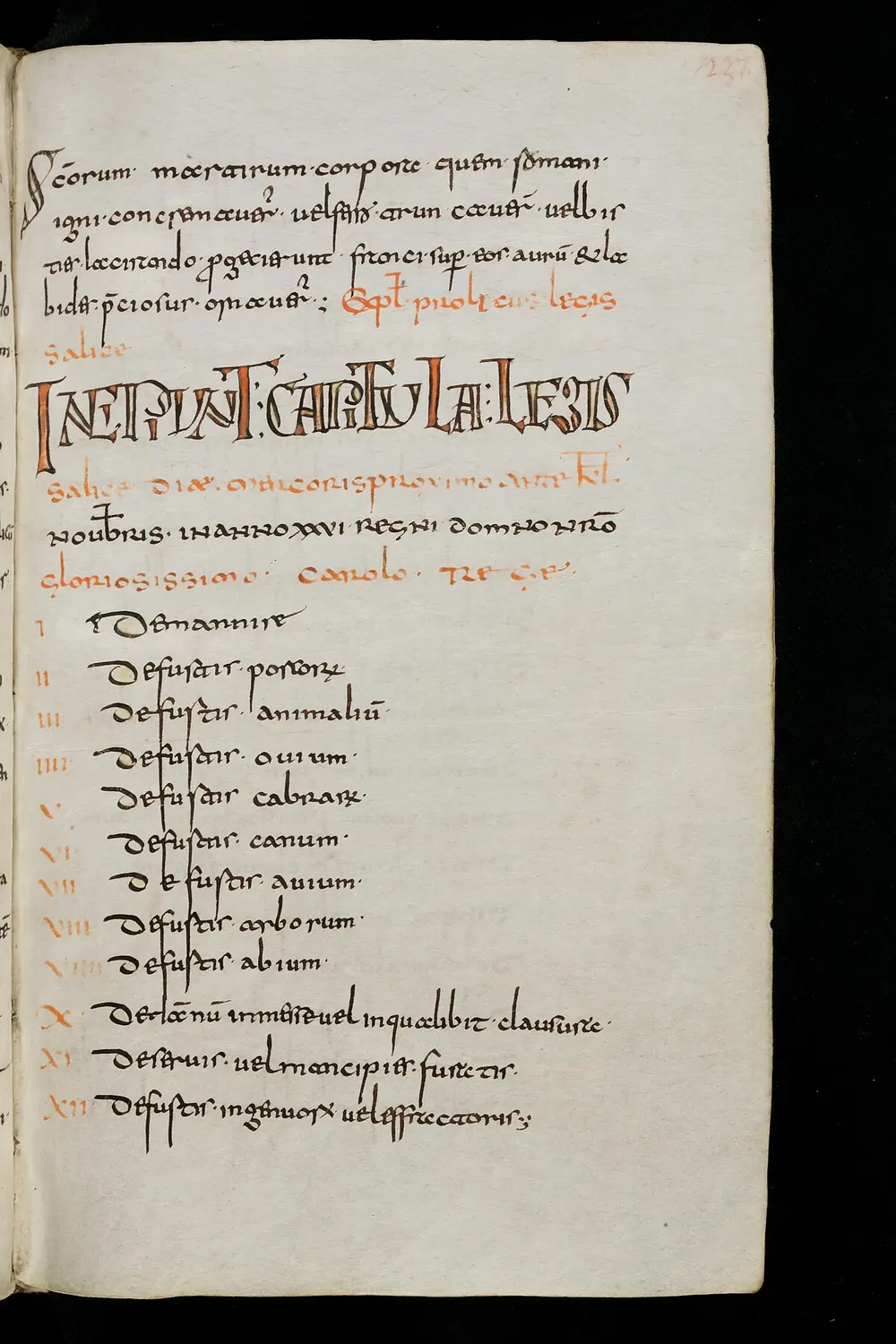
Salic law is a collection of laws of the Salian Franks written down under Clovis, around 500. It mainly sets fines for offences. One article forbids daughters to inherit “Salic land”, but it says nothing about the throne.
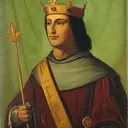
In 1316 and again in 1328, the great lords of the kingdom excluded a king’s daughter from the crown, then the king of England, who descended from Philip the Fair through his mother. Only later, during the Hundred Years’ War, did lawyers bring out the old Salic law to justify this choice. That is why France only ever had queens consort or regents, never a queen reigning in her own right.
A very old law of the Franks was used as an excuse to stop daughters from becoming queens. So the queens of France were kings’ wives, or ruled when the king was too young, but none was queen on her own.
 Philip V
 Philip VI
The Dauphin
The title of the heir to the throne
In 1349 the last lord of the Dauphiné, Humbert II, handed his province over to King Philip VI. It was the king’s grandson, the future Charles V, who received it: he became the first “Dauphin” of France, and the title then passed to the eldest son of each king. The arms of the Dauphiné show a dolphin (dauphin in French), hence the name.
Until the end of the monarchy, the heir to the throne bore this title and added a dolphin to his coat of arms. People also spoke of “Monseigneur le Dauphin” and, for his wife, of “Madame la Dauphine”.
The king’s eldest son, the one who would become king next, was called the Dauphin, which means “dolphin” in French. Why? Because he was given the Dauphiné region, which had a dolphin on its flag.
 Louis XI
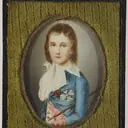 Louis XVII
Public domain — Wikimedia Commons
The royal touch
The healing king
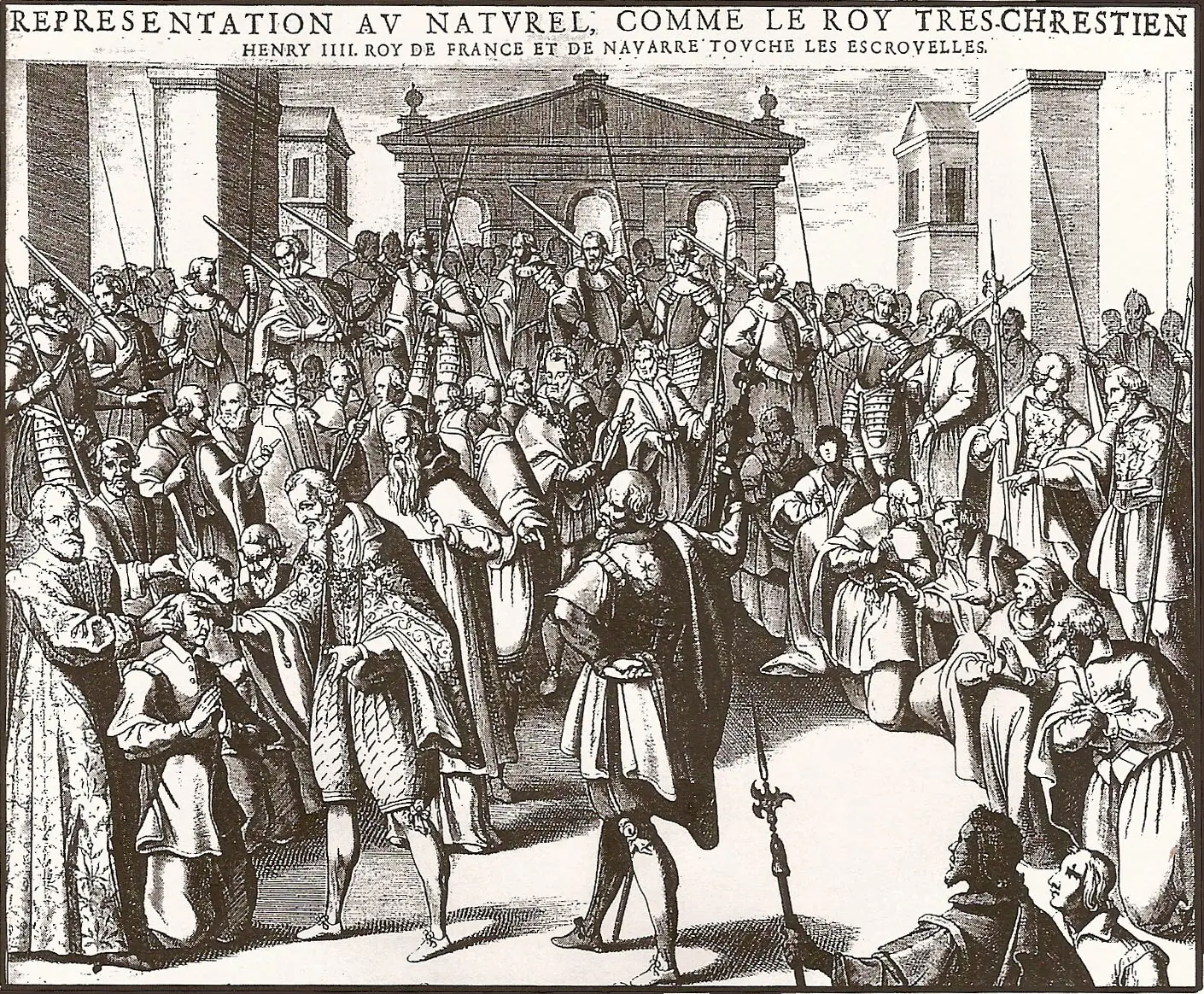
Scrofula (écrouelles) is a disease that makes the glands of the neck swell (a form of tuberculosis). People believed that the king, made sacred by anointing, could cure it by touching the sick and saying: “The king touches you, God heals you.”
This tradition appeared under the early Capetians and lasted until Charles X, in 1825. After the coronation, and then on great feast days, hundreds or thousands of sick people came to be touched. As the disease sometimes gets better on its own, some cases seemed to confirm the miracle.
People once believed the king had a magical power: by touching sick people, he could cure them of a disease of the neck. Thousands of people came to see him after his coronation.
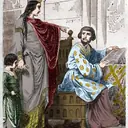 Robert II
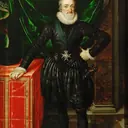 Henry IV
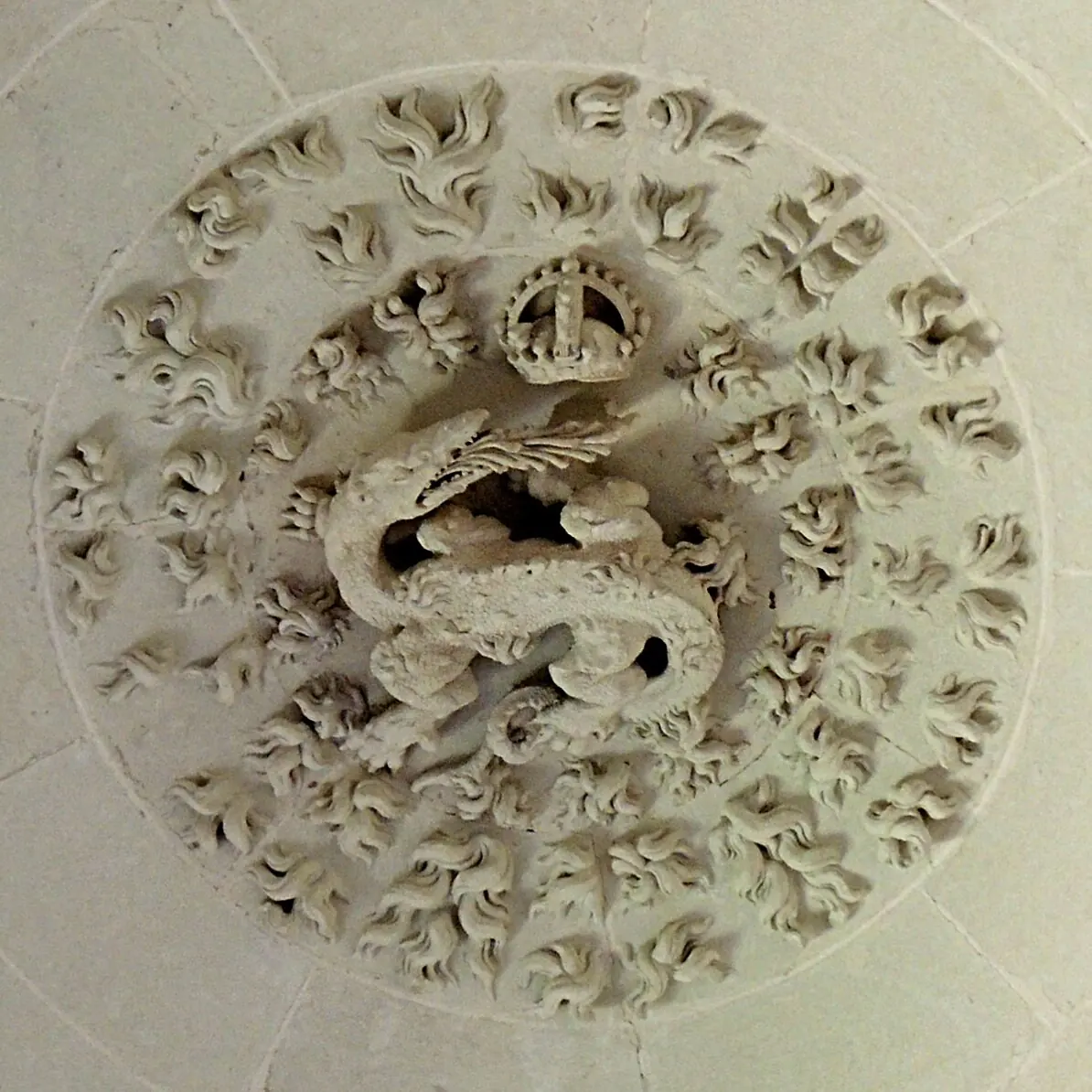
Photo: Abujoy — CC BY 3.0 — Wikimedia Commons
The kings’ emblems
Salamander, porcupine, sun…
In the Renaissance each king chose a personal emblem, which he had carved on his châteaux. Louis XII had the porcupine; Francis I the salamander, an animal said to live in fire, with the motto “Nutrisco et extinguo” (“I feed on it and I put it out”). At Chambord there are several hundred carved salamanders.
Henry II used a crescent moon and his monogram, Henry IV the crowned H, and Louis XIV the sun, which gave him his nickname of Sun King. Napoleon chose the eagle and the bee.
Each king had his favourite animal or design, like a personal logo. For Francis I it was the salamander, which people thought could live in fire. At Chambord there are hundreds of them, hidden everywhere! Look for them if you go there.
 Francis I
 Louis XII
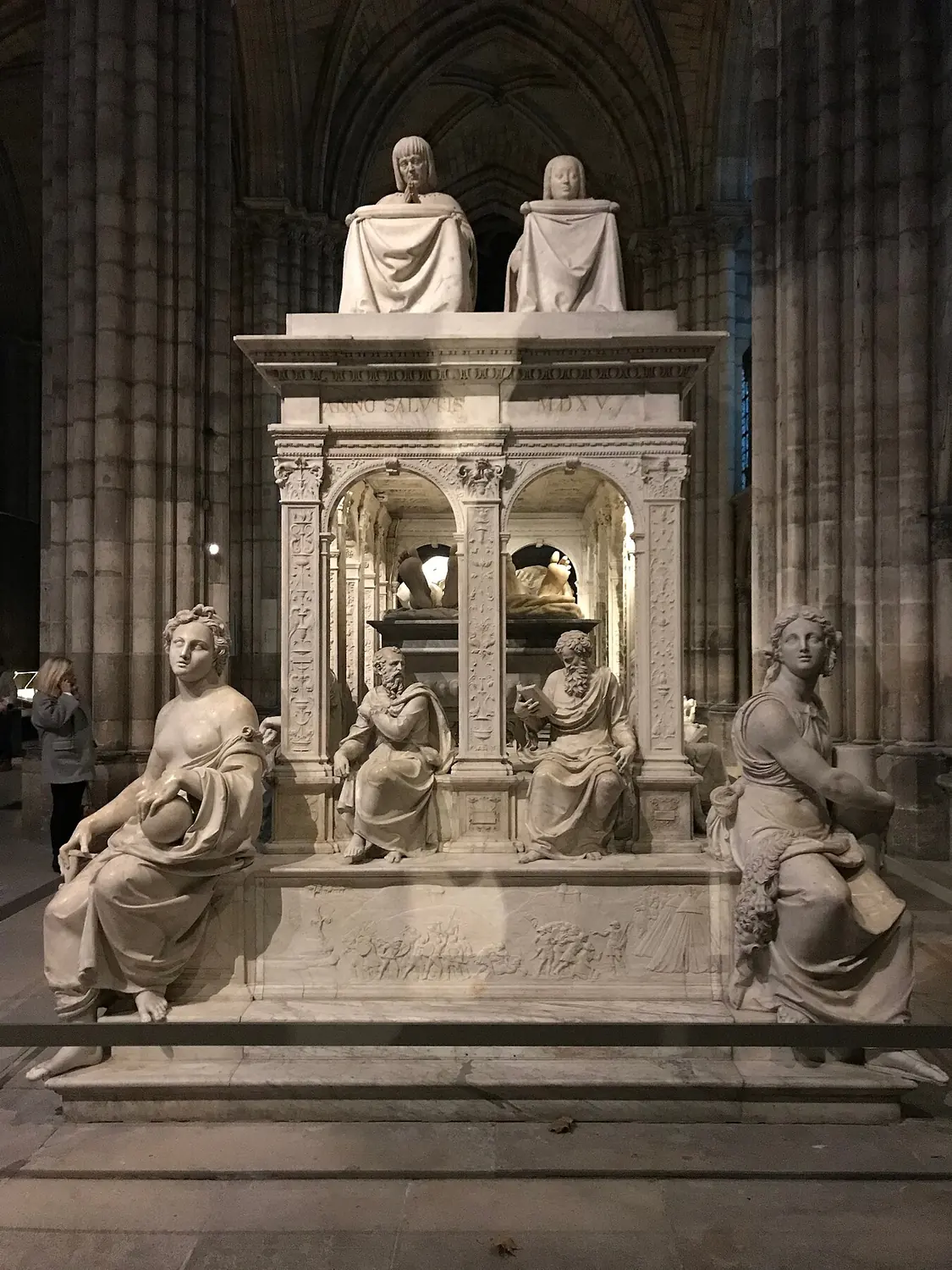
Photo: Chabe01 — CC BY-SA 4.0 — Wikimedia Commons
“The king is dead, long live the king!”
Royal funerals and tombs
As soon as a king died, his heir became king: people proclaimed “The king is dead, long live the king!”, meaning that kingship never stopped. The body of the late king was taken in procession to the basilica of Saint-Denis, where most kings had been buried since Dagobert.
From the 13th century, the tombs bore “gisants”, statues of the king or queen lying down. In the 16th century these monuments became spectacular, like that of Louis XII and Anne of Brittany, which shows the rulers twice: alive and praying at the top, dead below. In 1793 revolutionaries emptied the tombs, but the monuments were saved and put back in the 19th century.
When a king died, people shouted “The king is dead, long live the king!”, because his son became king straight away. Kings were buried at Saint-Denis, near Paris. On their tombs you can see them lying down, carved in stone.
 Anne of Brittany
 Henry II
 Catherine de’ Medici