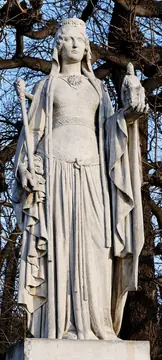
Carolingians
Charlemagne’s family, which re-founded the Western Empire, then saw its kingdom divided and its power fade away.
The Carolingians owe their name to Charles Martel and above all to Charlemagne (Carolus Magnus in Latin). Pepin the Short became king in 751 with the pope’s support; his son Charlemagne conquered a vast territory and was crowned emperor in Rome in 800.
The empire did not long survive his death: in 843 the Treaty of Verdun divided it between his grandsons. Charles the Bald received West Francia, the ancestor of France. Viking raids, ever more powerful great lords and family quarrels then weakened the kings.
At the end of the 9th century the great lords sometimes elected a king from outside the family: Odo and Robert I, from the Robertian family, then Rudolph of Burgundy. The Carolingians returned to power with Louis IV, but when Louis V died in 987, Hugh Capet, a Robertian, was elected.
The Carolingians are the family of Charlemagne, the king who became emperor in the year 800. After him, his grandsons shared out his huge empire. The western piece slowly became France.
- The king is anointed with holy oil, like the kings of the Bible
- Charlemagne is crowned emperor in 800
- The Treaty of Verdun (843) splits the empire into three
- Robertian kings alternate with the Carolingians from 888
The family tree
Click a name to open the profile. Queens appear under their husbands; grey boxes are family members who did not reign.
The rulers
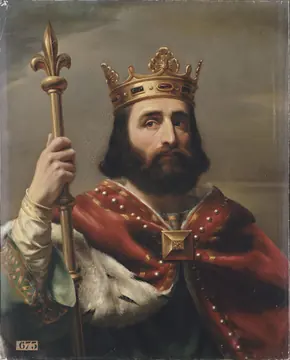 751–768
Pepin the Short
The son of Charles Martel, Pepin governed the Frankish kingdom as mayor of the palace before deposing the last Merovingian king in 751. The first Frankish king to be anointed with holy oil, he allied with the pope, fought the Lombards in Italy and conquered Aquitaine. He left a powerful kingdom to his sons Charlemagne and Carloman.
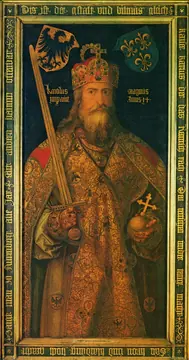 768–814, 774–814, 800–814
Charlemagne
Charles the GreatThe son of Pepin the Short, Charlemagne reigned for forty-six years. He conquered Lombardy, Saxony and Bavaria, brought much of western Europe under his rule and was crowned emperor in Rome in 800. He encouraged learning and teaching: this is the “Carolingian renaissance”.
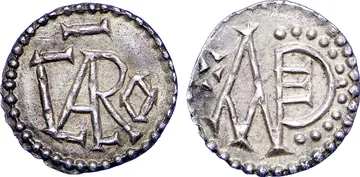 768–771
Carloman I
The son of Pepin the Short, Carloman received half the kingdom in 768, from Burgundy to Provence and Alsace, while his brother Charlemagne got the other half. The two brothers got on badly. Carloman died suddenly in 771, at twenty, and Charlemagne immediately took over his lands.
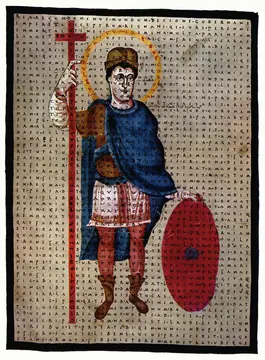 814–840
Louis the Pious
the DebonairCharlemagne’s only surviving son, Louis became emperor in 814. Deeply religious, he reformed the Church and the monasteries and wanted to keep the empire united. But his plans to share it between his sons sparked family wars: he was even deposed for a time in 833 before regaining his throne.
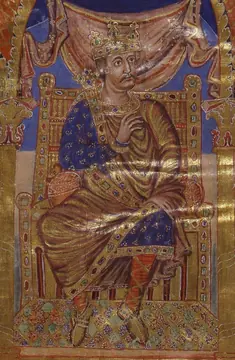 843–877, 875–877
Charles the Bald
A grandson of Charlemagne, Charles received West Francia, which would become France, at the Treaty of Verdun in 843. He had to face Viking raids, revolts by the great lords and his brothers’ ambitions. Crowned emperor in 875, he died two years later on his way back from Italy.
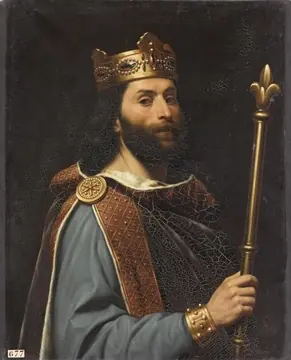 877–879
Louis II the Stammerer
Louis II succeeded his father in 877. In poor health and with a stammer, he had to buy the loyalty of the great lords by handing out lands and offices. Crowned twice, at Compiègne and then by the pope at Troyes, he died as early as 879, aged thirty-two, leaving two young sons and a child on the way.
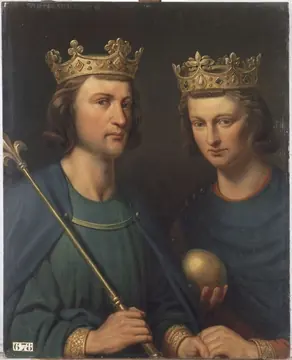 879–882
Louis III
The eldest son of Louis II the Stammerer, Louis III became king in 879 at about fifteen and shared the kingdom with his brother Carloman II. In 881 he won a great victory over the Vikings at Saucourt-en-Vimeu, celebrated in a poem. He died the following year in an accident.
 879–884
Carloman II
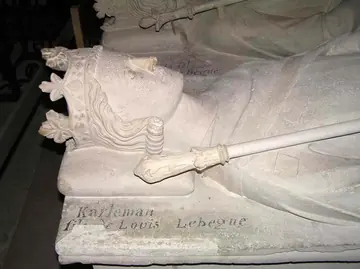
The son of Louis II the Stammerer, Carloman II shared the kingdom with his brother Louis III from 879, then reigned alone after Louis’s death in 882. He fought the Vikings and a rival, Boso, who had proclaimed himself king of Provence. He died in 884, wounded during a boar hunt.
 884–887, 881–887
Charles the Fat
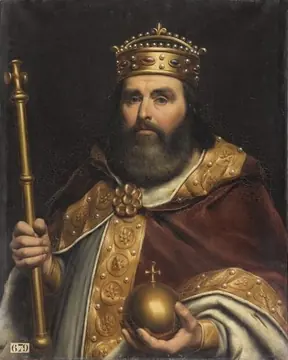
A great-grandson of Charlemagne, Charles the Fat was king of Alemannia and Italy, emperor, then king of East Francia. In 884 the great lords of West Francia called on him in turn: he then reigned over almost the whole former empire. But his conduct during the siege of Paris discredited him, and he was deposed in 887.
 888–898
Odo
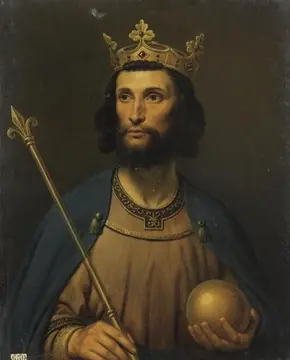
the defender of ParisThe son of Robert the Strong, Odo was count of Paris when the Vikings besieged the city in 885. His heroic defence made him famous. In 888, after Charles the Fat was deposed, the great lords elected him king. He later had to share power with the Carolingian Charles the Simple, who succeeded him in 898.
 898–922
Charles III the Simple
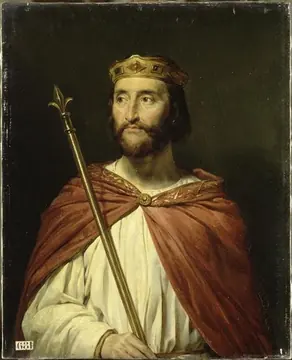
The posthumous son of Louis II the Stammerer, Charles was crowned in 893 against King Odo, then reigned alone from 898. In 911 he entrusted the Viking chief Rollo with a region around Rouen: this was the birth of Normandy. Overthrown by the great lords in 922, he died a prisoner in 929.
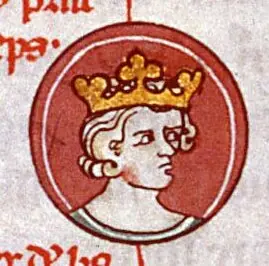 922–923
Robert I
The son of Robert the Strong and younger brother of Odo, Robert was one of the most powerful lords in the kingdom. In 922 the great lords, in revolt against Charles the Simple, elected him king. He was killed in 923 at the battle of Soissons, which his side nonetheless won. He was Hugh Capet’s grandfather.
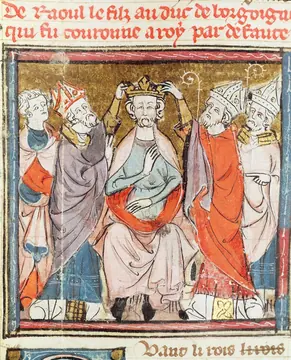 923–936
Rudolph
Rudolph of BurgundyThe son of Duke Richard the Justiciar of Burgundy and husband of Emma, Robert I’s daughter, Rudolph was elected king after his father-in-law’s death in 923. For thirteen years he had to fight the Vikings and rebellious lords, while the former king Charles the Simple remained a prisoner. He died childless in 936.
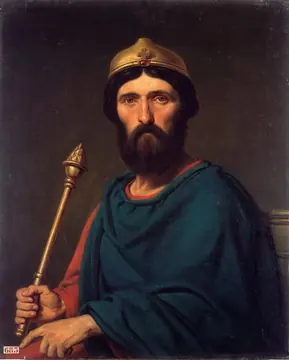 936–954
Louis IV from Overseas
The son of Charles the Simple, Louis was taken to England as a child when his father was captured. Recalled in 936 by Hugh the Great, he was crowned at Laon. Brave and stubborn, he fought for eighteen years to keep his authority. He died in 954 after a fall from his horse.
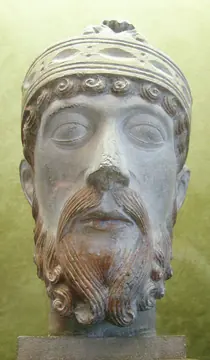 954–986
Lothair
The son of Louis IV, Lothair became king in 954 at thirteen, under the protection of Hugh the Great. As an adult he sought to reconquer Lorraine, the land of his ancestors. In 978 he swooped on Aachen by surprise and almost captured Emperor Otto II. He died at Laon in 986.
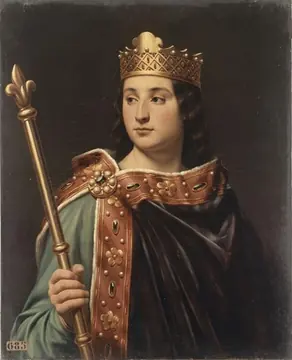 986–987
Louis V
the Do-NothingThe son of Lothair, Louis V was made co-king by his father in 979, then reigned alone from 986. His reign lasted only fourteen months: he died in May 987 after a fall while hunting in the forest of Senlis, without children. His death opened the way to the election of Hugh Capet.