Bourbons
From Henry IV to Louis XVI, absolute monarchy and Versailles; then, after the Revolution, the Restoration and the July Monarchy.
The Bourbons descend from Robert of Clermont, a son of Saint Louis. Henry IV, king of Navarre and a Protestant, became king of France in 1589, converted to Catholicism and ended the Wars of Religion with the Edict of Nantes (1598).
With Louis XIII and his minister Richelieu, then with Louis XIV, royal power became “absolute”: the king ruled without sharing his authority and settled at Versailles. Louis XV and Louis XVI reigned over a prosperous but indebted country; the Revolution of 1789 abolished the monarchy in 1792, and Louis XVI was guillotined in 1793.
After Napoleon’s fall, Louis XVI’s brothers, Louis XVIII then Charles X, returned to power: this is the Restoration. Driven out by the revolution of 1830, Charles X was replaced by his cousin Louis Philippe, of the Orléans branch, “King of the French” until the revolution of 1848, France’s last monarchy.
The Bourbons are the family of Louis XIV, the Sun King, who had the Palace of Versailles built. Their reign was interrupted by the French Revolution, then they came back for a few years after Napoleon.
- Absolute monarchy: the king decides alone
- Versailles becomes the centre of power
- The Revolution of 1789 ends the Ancien Régime
- Restoration (1814-1830) and July Monarchy (1830-1848)
The family tree
Click a name to open the profile. Queens appear under their husbands; grey boxes are family members who did not reign.
The rulers
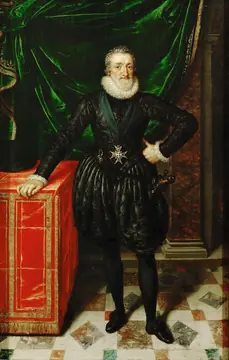 1589–1610, 1572–1610
Henry IV
the Green Gallant, good King HenryKing of Navarre and leader of the Protestants, Henry of Bourbon became king of France in 1589. He had to conquer his kingdom against the Catholic League, converted to Catholicism in 1593 and in 1598 signed the Edict of Nantes, which gave Protestants freedom of worship. With his minister Sully, he restored the country. He was assassinated in 1610.
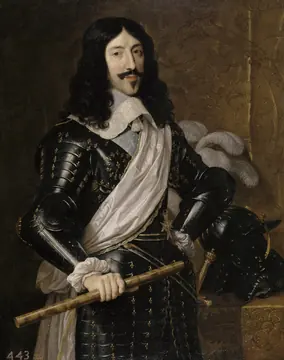 1610–1643
Louis XIII
the JustThe son of Henry IV, Louis XIII became king at eight, in 1610. In 1617 he seized power by pushing his mother aside. From 1624 he governed with Cardinal Richelieu: they brought the Protestants and the great lords to heel and took France into the Thirty Years’ War. He died in 1643, five years after the birth of Louis XIV.
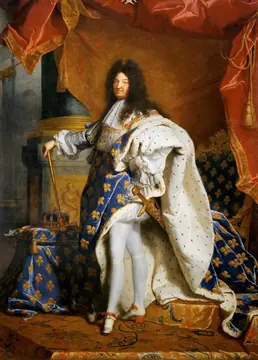 1643–1715
Louis XIV
the Sun KingKing at four, Louis XIV reigned from 1643 to 1715, the longest reign in French history. From 1661 he governed alone, without a chief minister. He made Versailles the centre of power and the arts, enlarged the kingdom through long wars, but revoked the Edict of Nantes and left an exhausted country.
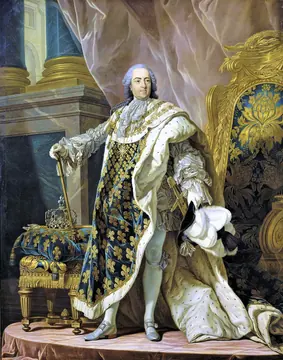 1715–1774
Louis XV
the BelovedLouis XIV’s great-grandson, Louis XV reigned from 1715 to 1774. After the Regency and Cardinal Fleury’s government, he ruled in his own right from 1743. His reign saw France prosper and the ideas of the Enlightenment spread, but also the loss of Canada and India in 1763. He died unpopular.
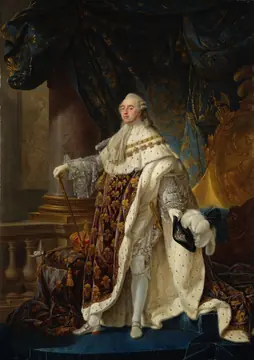 1774–1791, 1791–1792
Louis XVI
Louis XV’s grandson, Louis XVI became king in 1774, aged nineteen. He attempted reforms and supported the American War of Independence, but failed to solve the financial crisis. In 1789 the meeting of the Estates General opened the Revolution. A constitutional king in 1791, overthrown in 1792, he was guillotined on 21 January 1793.
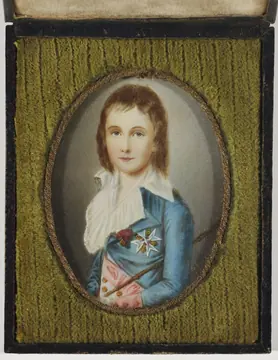 Never reigned
Louis XVII
the child of the TempleThe second son of Louis XVI and Marie Antoinette, Louis-Charles became Dauphin in 1789 when his elder brother died. Imprisoned with his family in the Temple in 1792, he was regarded by royalists as King Louis XVII after his father’s execution. Separated from his mother, isolated and ill-treated, he died in prison in 1795, aged ten.
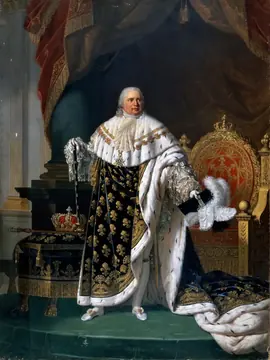 1814–1815, 1815–1824
Louis XVIII
the DesiredLouis XVI’s younger brother, the Count of Provence fled the Revolution in 1791. In exile, he proclaimed himself king in 1795, when Louis XVII died. He only truly took the throne in 1814, after Napoleon’s abdication, and granted the French a constitutional Charter. Driven out by Napoleon’s return in 1815, he came back after Waterloo and reigned until his death in 1824.
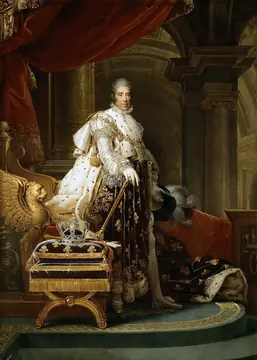 1824–1830
Charles X
The youngest brother of Louis XVI and Louis XVIII, the Count of Artois emigrated as early as July 1789 and became the leader of the most uncompromising royalists. King in 1824, he was crowned at Reims in 1825. His ordinances of July 1830, which restricted freedom of the press and the right to vote, sparked the Three Glorious Days. He abdicated and ended his life in exile.
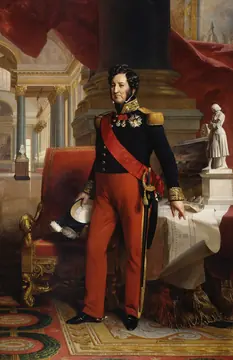 1830–1848
Louis Philippe I
the Citizen KingThe son of the Duke of Orléans known as Philippe Égalité, Louis Philippe fought in the armies of the Revolution before a long exile. Brought to power by the July Revolution of 1830, he took the title of King of the French and reigned alongside Parliament. After eighteen years, a new revolution drove him out in February 1848; he died in England in 1850.
Queens and regents
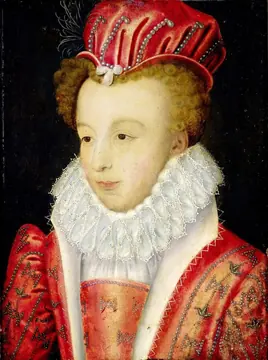 1572–1599
Margaret of Valois
Queen MargotThe daughter of Henry II and Catherine de’ Medici, Marguerite married the Protestant Henry of Navarre in 1572, six days before the St Bartholomew’s Day massacre. Their childless marriage was annulled in 1599. A cultured, independent woman, she left Memoirs, the first written by a woman in France.
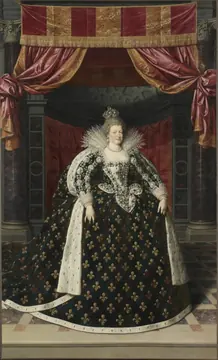 1600–1610, 1610–1614
Marie de’ Medici
A Florentine princess, Marie de’ Medici married Henry IV in 1600 and gave him six children, including Louis XIII. Crowned the day before the king’s assassination, she became regent in 1610. Pushed aside by her son in 1617, reconciled and then defeated by Richelieu on the Day of the Dupes in 1630, she died in exile in Cologne in 1642.
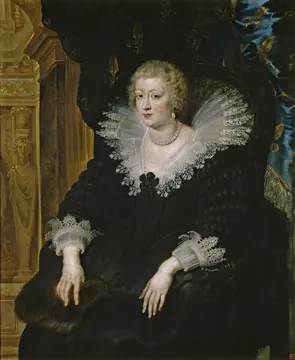 1615–1643, 1643–1651
Anne of Austria
The daughter of the king of Spain, Anne of Austria married Louis XIII in 1615. After twenty-three childless years she gave birth to Louis XIV in 1638, then to Philippe of Orléans. Regent from 1643 to 1651, she governed with Cardinal Mazarin and held firm during the Fronde, the revolt of the parlements and the princes.
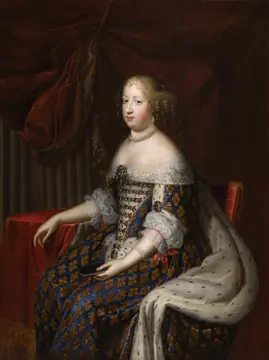 1660–1683
Maria Theresa of Spain
The daughter of King Philip IV of Spain, Maria Theresa married her cousin Louis XIV in 1660, at Saint-Jean-de-Luz, to seal the peace between France and Spain. A discreet and pious queen, she had six children, of whom only one survived: the Grand Dauphin. She died at Versailles in 1683.
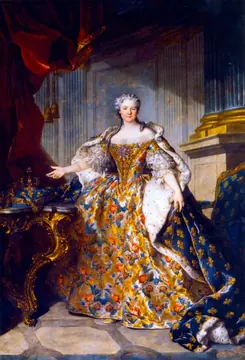 1725–1768
Marie Leszczyńska
The daughter of Stanisław Leszczyński, a deposed king of Poland, Marie married Louis XV in 1725: she was twenty-two, he fifteen. She gave him ten children, including the Dauphin Louis, father of three kings. Pious, charitable and discreet, she remained queen for forty-three years, until her death in 1768.
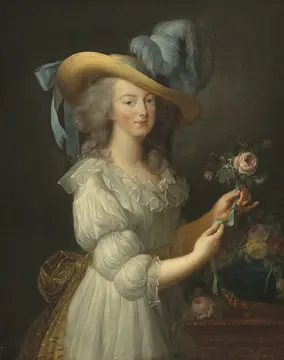 1774–1792
Marie Antoinette
The daughter of Empress Maria Theresa of Austria, Marie Antoinette married the future Louis XVI in 1770, at fourteen. Queen in 1774, she led a life of entertainments and retreated to the Petit Trianon, which made her deeply unpopular. During the Revolution she backed the king’s resistance. She was guillotined on 16 October 1793.
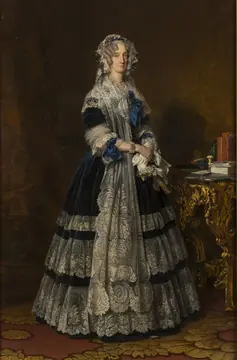 1830–1848
Maria Amalia of Naples and Sicily
A princess of Naples and Marie Antoinette’s niece, Maria Amalia married Louis Philippe of Orléans in 1809, when he was in exile. She became Queen of the French in 1830. Discreet in politics, she devoted herself to her family and to charity. After the 1848 revolution she followed her husband to England, where she died in 1866.