Louis XV
the Beloved
King at five, first “Beloved” then unpopular: the reign of the Enlightenment, of Madame de Pompadour and of the loss of Canada.
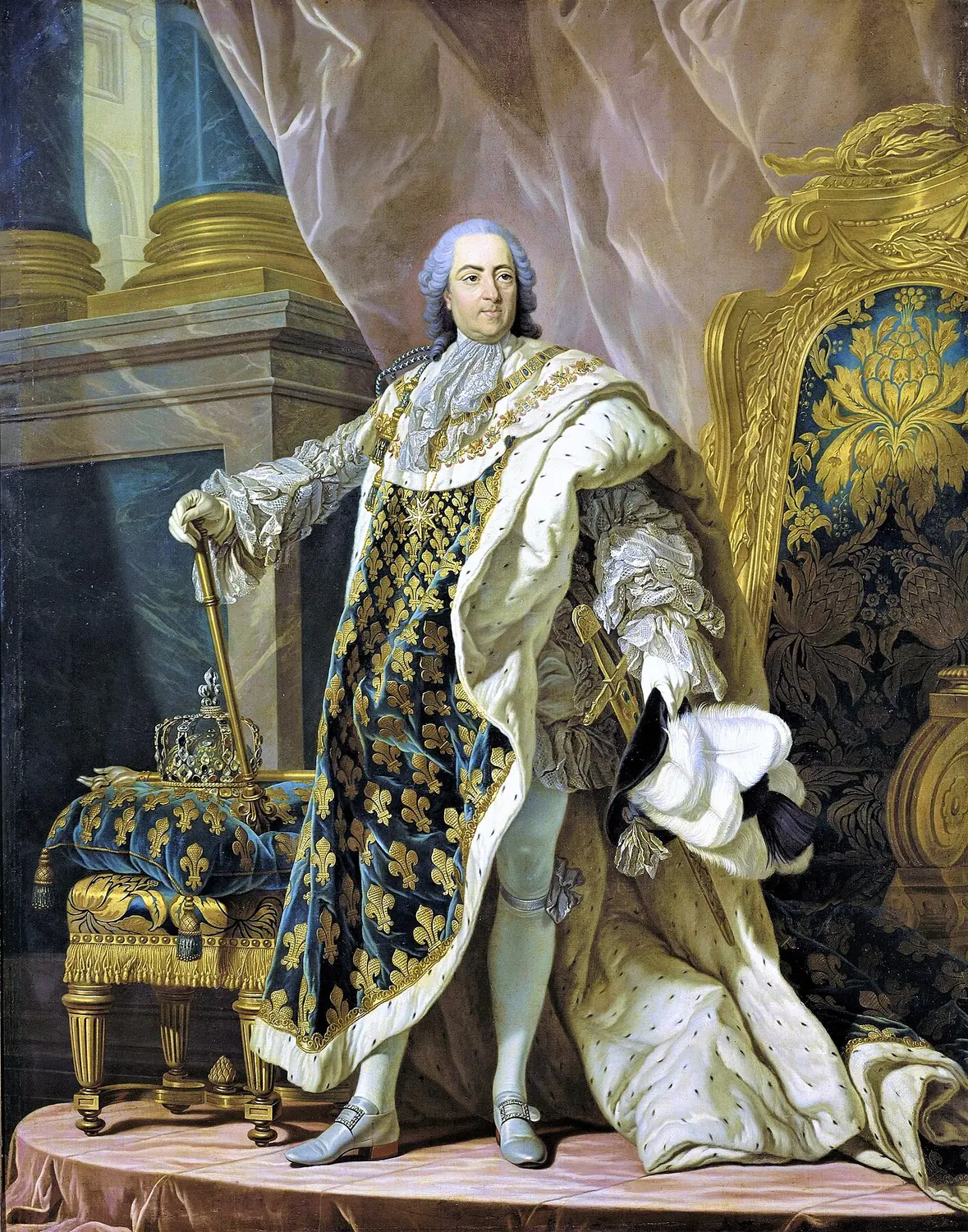
Public domain — Wikimedia Commons
1In brief
Louis XIV’s great-grandson, Louis XV reigned from 1715 to 1774. After the Regency and Cardinal Fleury’s government, he ruled in his own right from 1743. His reign saw France prosper and the ideas of the Enlightenment spread, but also the loss of Canada and India in 1763. He died unpopular.
2Life
Orphaned at two and king at five, Louis grew up under the regency of Philippe of Orléans, then the guardianship of Cardinal Fleury, who governed in peace and prosperity until 1743. Married in 1725 to Marie Leszczyńska, he had ten children. In 1744 he fell seriously ill at Metz; his recovery was celebrated throughout the kingdom, which nicknamed him “the Beloved”.
He won the victory of Fontenoy in 1745, but the Seven Years’ War (1756-1763) was a disaster: France lost Canada and almost all of India. Yet the kingdom gained Lorraine (1766) and Corsica (1768). The influence of his favourites, including Madame de Pompadour and Madame du Barry, and new taxes made him unpopular. He died of smallpox in 1774.
3Reign
- 1715King at five; the Regency
- 1725Marries Marie Leszczyńska
- 1744Ill at Metz: “the Beloved”
- 1745Victory at Fontenoy
- 1763Treaty of Paris: loss of Canada
- 1766Lorraine joins France
- 1768Purchase of Corsica
- 1774Dies of smallpox
4Legacy
Under Louis XV, France shone through its philosophers, scientists and artists: Voltaire, Diderot and the Encyclopédie, Rameau, Boucher. He had the École Militaire built, the Place Louis XV (now Place de la Concorde) and the church of Sainte-Geneviève, the future Panthéon.
5Did you know?
His fifty-nine-year reign is the second longest in French history, after Louis XIV’s.
The phrase “After us, the flood!” is attributed to Madame de Pompadour, perhaps wrongly.
6Family
 Marie LeszczyńskaWife