Mary, Queen of Scots
Queen of Scots at six days old and queen of France at sixteen, she ended her life executed on the orders of Elizabeth I of England.
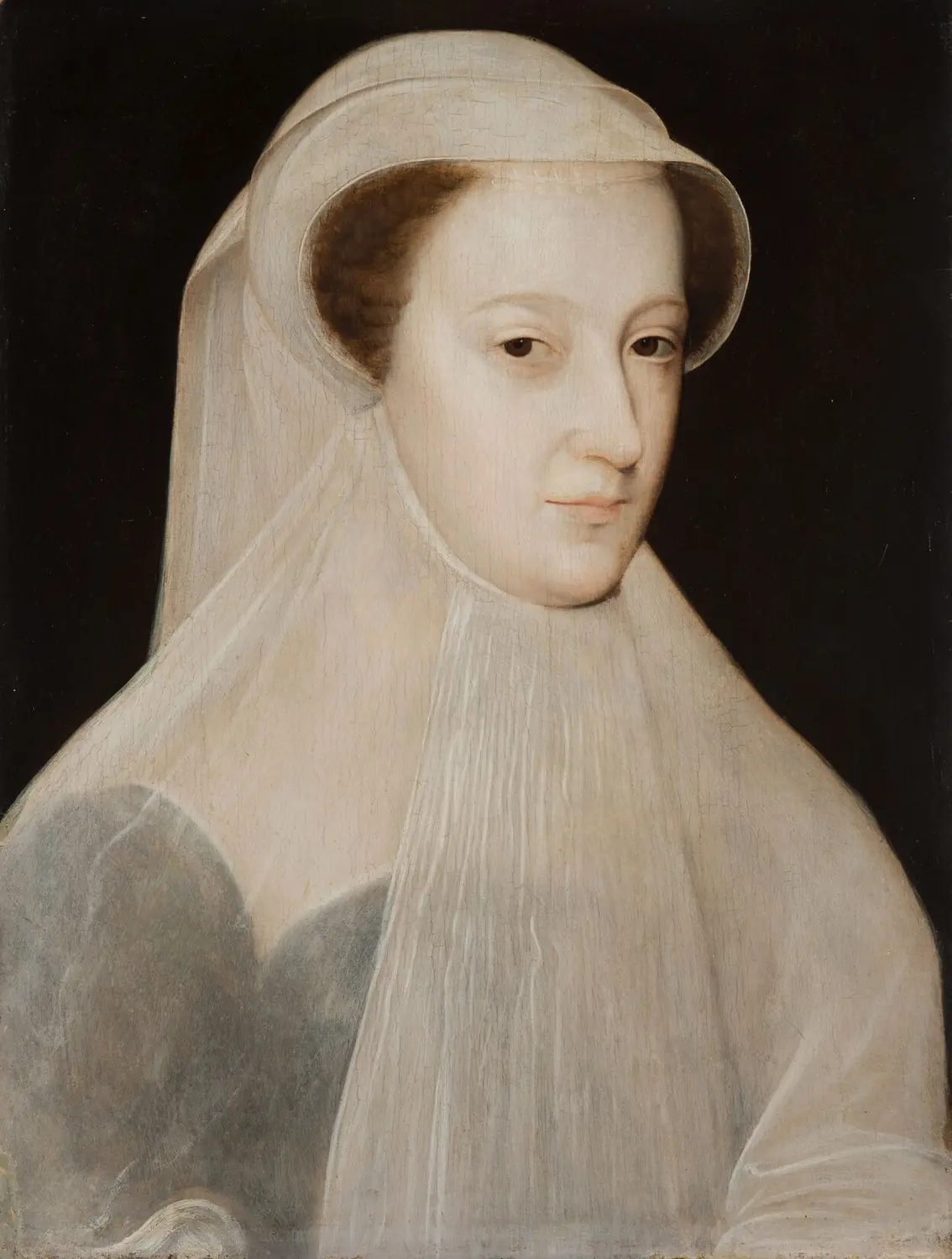
Public domain — Wikimedia Commons
1In brief
The daughter of King James V of Scotland, Mary became queen of Scots a few days after her birth. Brought up in France, she married the future Francis II and was queen of France in 1559-1560. Widowed at eighteen, she returned to Scotland, where her reign turned to tragedy. Taking refuge in England, she was imprisoned there for nineteen years, then executed in 1587.
2Life
Sent to France at five, Mary grew up at the Valois court, where she learned French, Latin, poetry and music. She married the Dauphin Francis in 1558 and became queen of France the following year. When her husband died in 1560 she wore the white mourning of French queens, then returned to Scotland, which had become Protestant.
A Catholic in a Protestant country, she clashed with the Scottish lords. Her second husband, Lord Darnley, was murdered in 1567; she soon married the earl of Bothwell, suspected of the murder. Forced to abdicate in favour of her son James, she fled to England in 1568. Her cousin Elizabeth I kept her prisoner; accused of plotting, she was beheaded in 1587.
3Role
- 1542Queen of Scots at six days old
- 1548Arrives in France
- 1558Marries the Dauphin Francis
- 1559Queen of France
- 1561Returns to Scotland
- 1567Forced to abdicate
- 1587Executed at Fotheringhay
4Legacy
Mary Stuart’s tragic fate inspired writers and musicians, from Schiller to Donizetti. An irony of history: her son James VI of Scotland succeeded Elizabeth I in 1603 and united the crowns of Scotland and England.
5Did you know?
In her portrait she wears “white mourning”, worn by queens of France on their husband’s death.
She spoke and wrote French, her favourite language, better than Scots.
The poem “Farewell, pleasant land of France”, which she supposedly wrote on leaving France, was actually made up in the 18th century.
6Family
 Francis IIHusband