Philip II Augustus
Philip Augustus
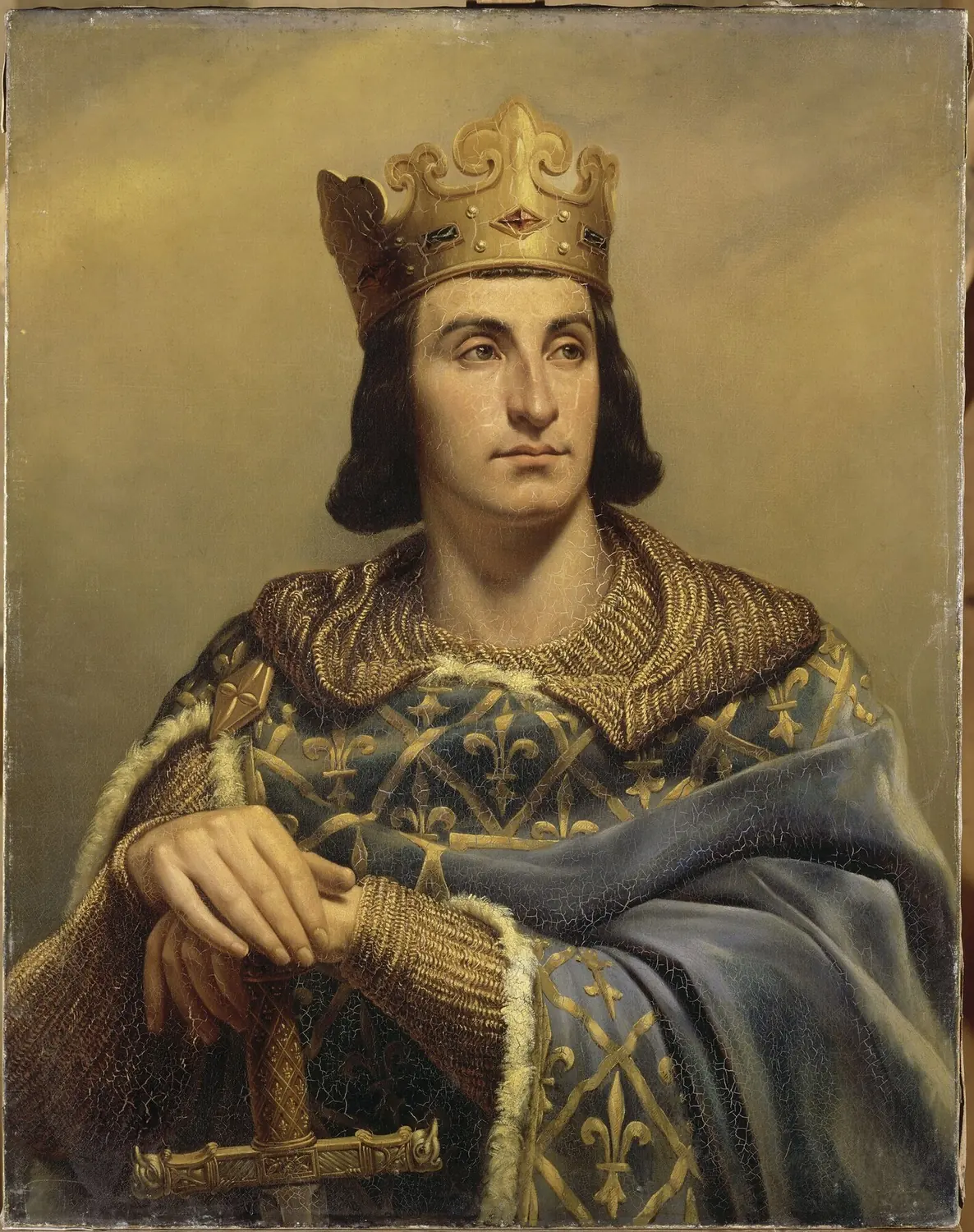
The victor of Bouvines, who took Normandy back from the Plantagenets and made Paris a great capital.
Public domain — Wikimedia Commons
1In brief
The son of Louis VII, Philip Augustus reigned from 1180 to 1223. He wrested Normandy, Anjou, Maine and Touraine from the kings of England, then triumphed at Bouvines in 1214 over a coalition led by the emperor. He surrounded Paris with a wall, built the Louvre and gave the kingdom a real administration.
2Life
Crowned at fourteen, Philip left in 1190 on the Third Crusade with Richard the Lionheart, then quickly returned to France and took advantage of Richard’s captivity to attack his lands. In 1202 he confiscated the French fiefs of John Lackland, Richard’s brother; in 1204 he took Château-Gaillard, then Rouen: Normandy was French.
On 27 July 1214, at Bouvines near Lille, he defeated Emperor Otto IV and his allies, while his son Louis drove back John Lackland in Anjou. The victory had an immense impact. Philip entrusted justice and taxes to royal agents, the bailiffs, had the main streets of Paris paved and kept the royal archives. He died in 1223, leaving a kingdom three times larger than at his accession.
3Reign
- 1180Becomes king at fifteen
- 1190Leaves on the Third Crusade
- 1190Begins the wall of Paris and the Louvre
- 1204Conquest of Normandy
- 1214Victory at Bouvines
- 1223Dies at Mantes
4Legacy
Philip Augustus was one of the great builders of the kingdom: he made the Capetian king the most powerful lord in France. He was the first to call himself “king of France” rather than “king of the Franks”. Remains of his wall and the foundations of the Louvre can still be seen in Paris.
5Did you know?
The chronicler Rigord nicknamed him “Augustus” because he had “augmented” the kingdom, like the Roman emperors, and because he was born in August.
He was the first Capetian not to have his son crowned during his lifetime: the dynasty was now strong enough.
6Family
 Louis VIIFather
 Louis VIIIChild