Bertrada of Laon
Bertha Broadfoot
Wife of Pepin the Short and mother of Charlemagne, who passed into legend as “Bertha Broadfoot”.
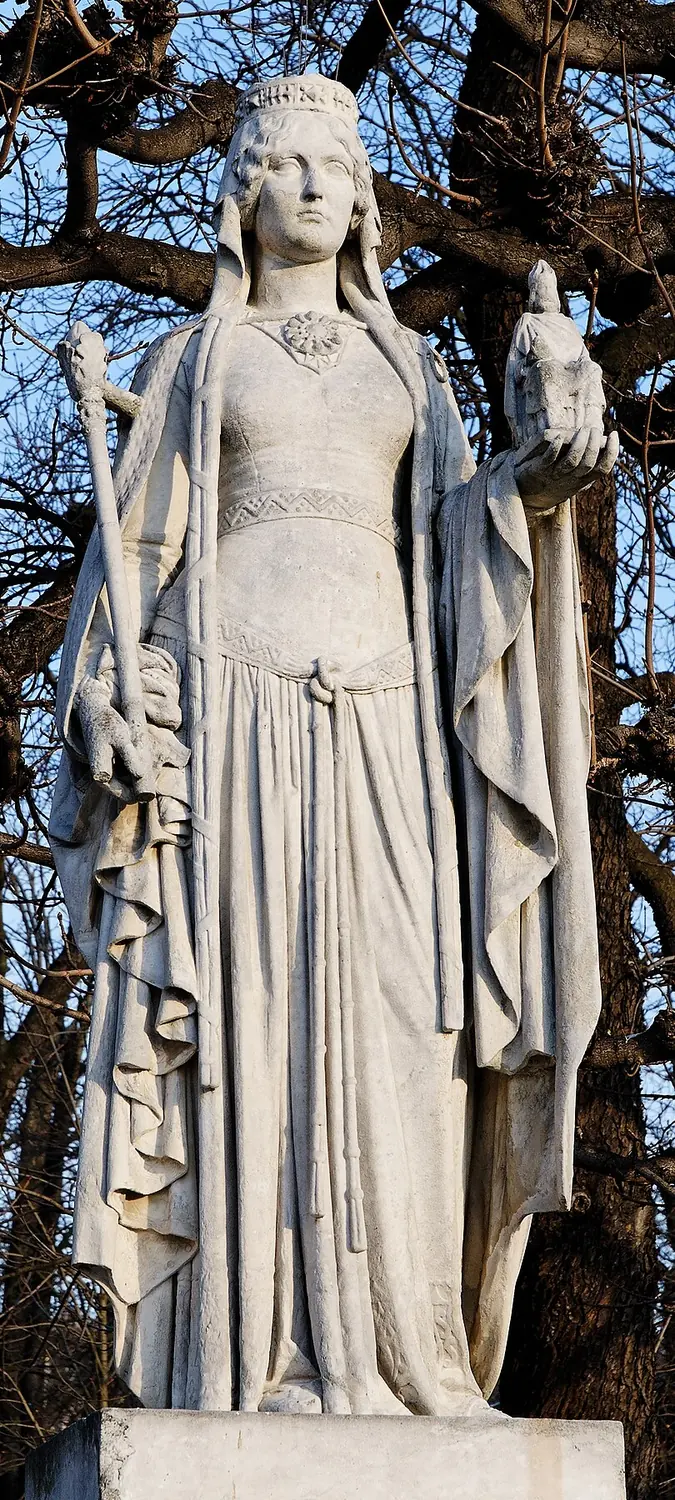
Photo: Jastrow — CC BY 3.0 — Wikimedia Commons
1In brief
The daughter of Count Charibert of Laon, Bertrada married Pepin the Short around 744. Anointed queen with him by the pope in 754, she was the mother of Charlemagne and Carloman. Widowed in 768, she tried to reconcile her two rival sons and remained respected at court until her death in 783.
2Life
From a great Austrasian family, Bertrada married Pepin when he was still only mayor of the palace. She shared his rise: in 754, at Saint-Denis, Pope Stephen II blessed her with her husband and their sons. The couple had several children, including Charlemagne, Carloman and Gisela, later abbess of Chelles.
When Pepin died, their sons shared the kingdom and got on badly. Bertrada acted as a go-between and arranged Charlemagne’s marriage to a Lombard princess, but this alliance was soon broken. Charlemagne, reports his biographer Einhard, always treated her with great respect. She died in 783 and was buried at Saint-Denis.
3Role
- c. 744Marries Pepin
- c. 748Birth of Charlemagne (date debated)
- 751Becomes queen
- 754Blessed by the pope at Saint-Denis
- 770Arranges Charlemagne’s marriage to a Lombard princess
- 783Dies at Choisy
4Legacy
As “Bertha Broadfoot”, Bertrada became the heroine of a medieval romance: a servant supposedly took her place beside Pepin before the real queen was recognised… thanks to her big foot. Her nickname may come from a club foot.
5Did you know?
The French expression “in the days when Queen Bertha spun” means a distant, ideal past.
Her statue, in the series of queens in the Luxembourg Garden, was carved in 1848.
The story of the servant who usurps Bertha’s place is a 13th-century romance by the poet Adenet le Roi: it is not history.
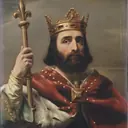 Pepin the Short
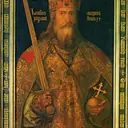 Charlemagne
 Carloman I