Philip III
the Bold
Proclaimed king in Africa, outside Tunis, he added the county of Toulouse to the royal domain and died on a crusade against Aragon.
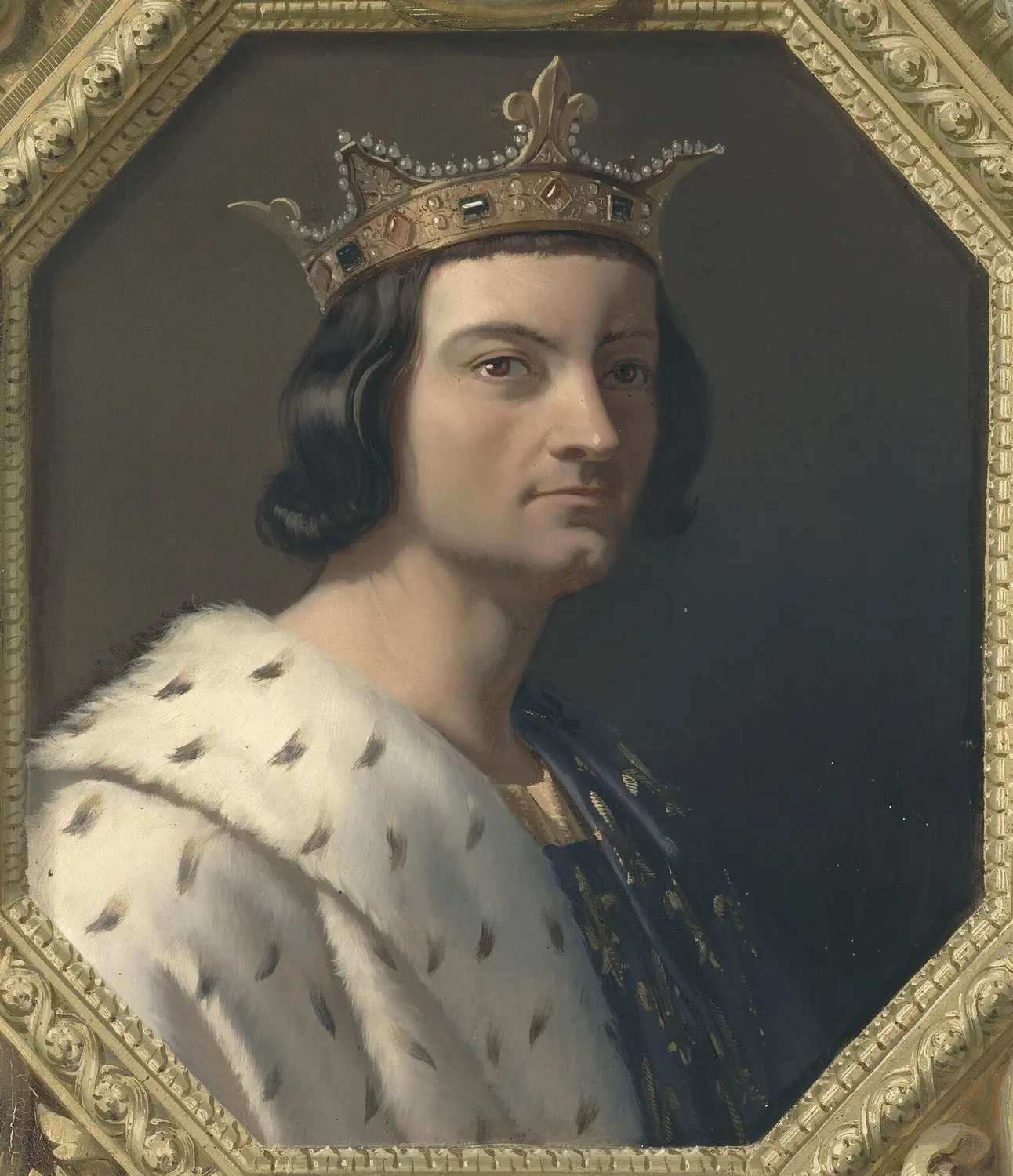
Public domain — Wikimedia Commons
1In brief
The son of Saint Louis, Philip III became king in 1270 outside Tunis, where his father had just died. During his fifteen-year reign he inherited the county of Toulouse and prepared the joining of Champagne by marrying his son to the heiress of Navarre. He died in 1285 on the way back from an expedition against the king of Aragon.
2Life
The return from the Tunis crusade was tragic: the army brought back the bodies of Saint Louis, of Philip’s brother and brother-in-law, and of his wife, Isabella of Aragon, who had died in Calabria after a fall from her horse. Crowned at Reims in 1271, Philip inherited the county of Toulouse and Poitou that same year, on the death of his uncle Alphonse of Poitiers.
He gave a great deal of power to his chamberlain, Pierre de La Brosse, who was finally hanged in 1278. After the “Sicilian Vespers” (1282), which drove his uncle Charles of Anjou out of Sicily in favour of the king of Aragon, the pope launched a crusade against Aragon. Philip crossed the Pyrenees in 1285, but the expedition failed and he died of illness at Perpignan.
3Reign
- 1270Proclaimed king outside Tunis
- 1271Crowned at Reims; inherits the county of Toulouse
- 1274Remarries Mary of Brabant
- 1284Marries his son to Joan of Navarre
- 1285Aragonese crusade; dies at Perpignan
4Legacy
An often forgotten reign, between Saint Louis and Philip the Fair, Philip III’s nevertheless greatly enlarged the royal domain in the south.
5Did you know?
His nickname, “the Bold”, recalls his courage in battle.
His flesh was buried at Narbonne and his heart in Paris, while his bones were laid at Saint-Denis: a royal custom of the time.
6Family
 Louis IXFather
 Margaret of ProvenceMother
 Philip IVChild