Charles X
The last king crowned at Reims: keen to bring back the old monarchy, he was overthrown by the revolution of July 1830.
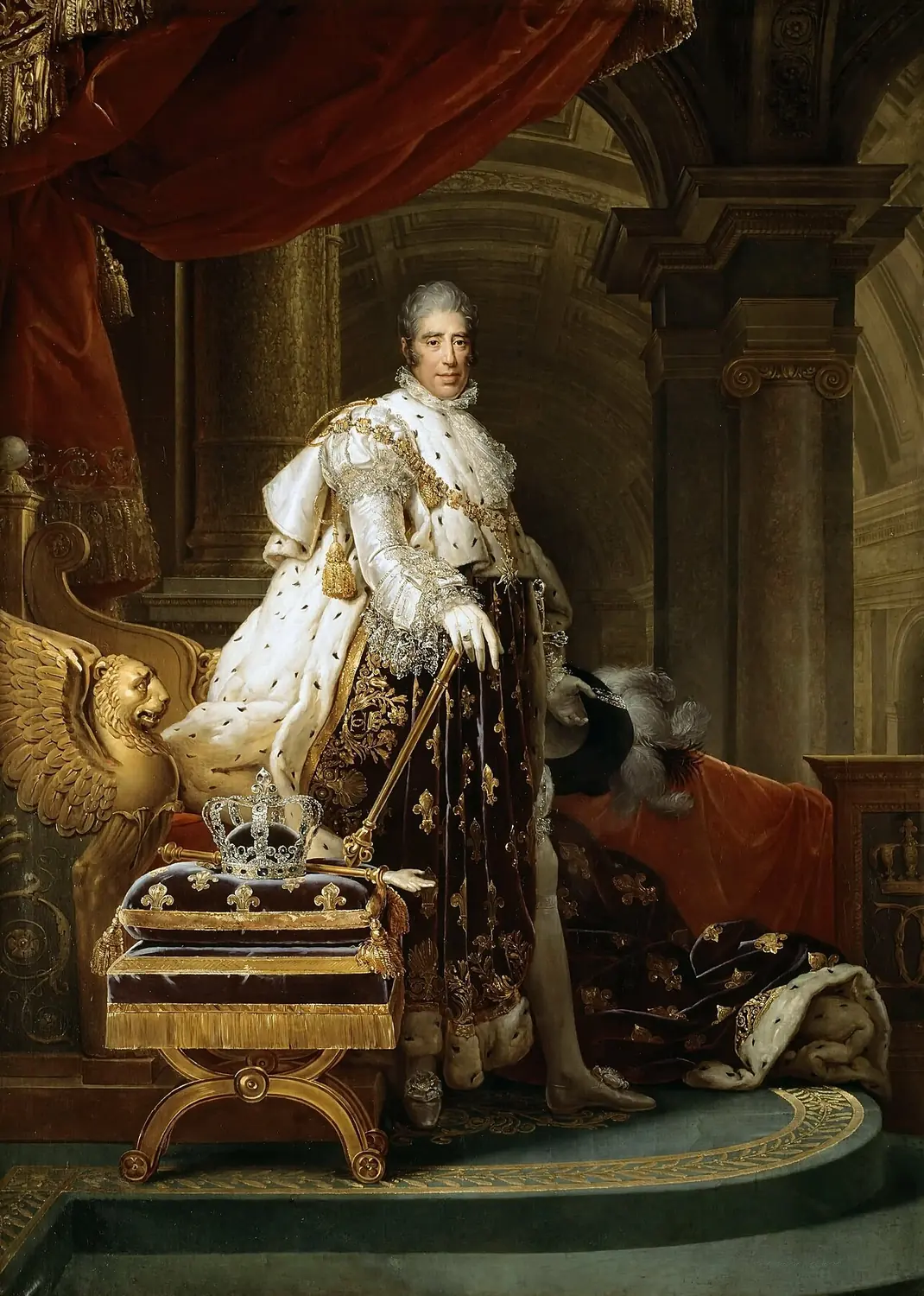
Public domain — Wikimedia Commons
1In brief
The youngest brother of Louis XVI and Louis XVIII, the Count of Artois emigrated as early as July 1789 and became the leader of the most uncompromising royalists. King in 1824, he was crowned at Reims in 1825. His ordinances of July 1830, which restricted freedom of the press and the right to vote, sparked the Three Glorious Days. He abdicated and ended his life in exile.
2Life
Born at Versailles in 1757, Charles Philippe, Count of Artois, was an elegant young prince who loved gambling and spending, and was close to his sister-in-law Marie Antoinette. In 1773 he married Maria Theresa of Savoy, the sister of his brother Louis’s wife. In the days after the storming of the Bastille he left France and, from abroad, organised opposition to the Revolution.
Back in 1814, he led the “ultra” party. In 1820 his son the Duke of Berry was assassinated; a few months later a posthumous son, Henri, was born, nicknamed “the miracle child”. King in 1824, Charles X revived the old rituals: he was crowned at Reims on 29 May 1825. His government passed compensation for émigrés whose property had been sold. In 1830 the French army took Algiers. But in July, the Saint-Cloud ordinances set Paris ablaze: after three days of rioting, on 27, 28 and 29 July, he abdicated and went into exile, in Scotland, Prague and finally Gorizia, where he died of cholera in 1836.
3Reign
- 1773Marries Maria Theresa of Savoy
- 1789Leaves France after the storming of the Bastille
- 1824King of France
- 1825Crowned at Reims
- 1830Capture of Algiers
- 1830July Revolution; abdication
- 1836Dies in exile in Gorizia
4Legacy
Charles X’s reign showed that a return to the monarchy of before 1789 was no longer possible. His fall opened the July Monarchy of Louis Philippe. He now rests in Slovenia, at Kostanjevica Monastery, near the Italian border.
5Did you know?
As a young man, he had the Château de Bagatelle in the Bois de Boulogne built in just over two months, after a bet with Marie Antoinette.
His coronation in 1825 was the last in French history; the painter François Gérard depicted it in a large canvas.