Charles IV
the Fair
The last of the direct Capetians: when he died without a son in 1328, the crown passed to the Valois.
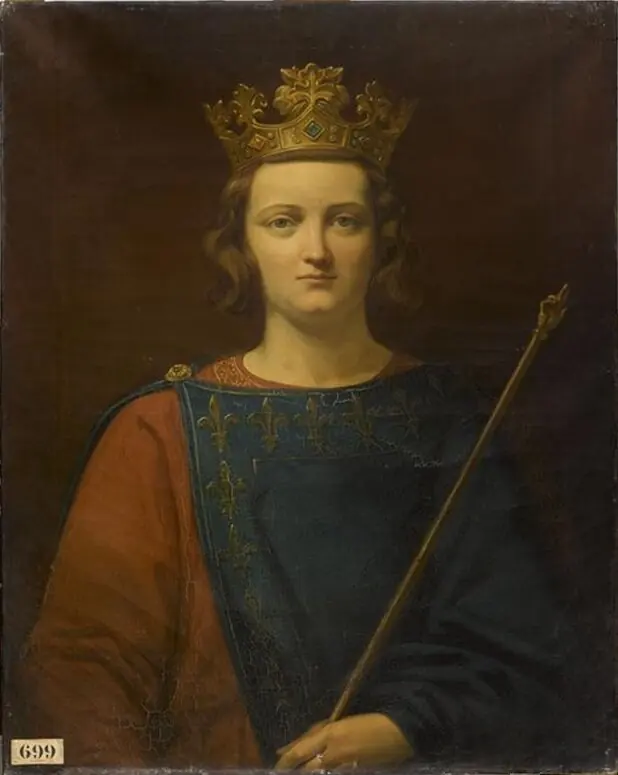
Public domain — Wikimedia Commons
1In brief
Philip the Fair’s third son, Charles IV reigned from 1322 to 1328. He married three times in the hope of an heir. He fought England in Guyenne in the War of Saint-Sardos. When he died he left only a daughter, born after him: the dynasty of the direct Capetians died out.
2Life
Like his brothers, Charles was hit by the Tour de Nesle affair: his wife, Blanche of Burgundy, was shut away in 1314. As king, he had this marriage annulled and married Mary of Luxembourg, who died in childbirth in 1324, then Joan of Évreux.
In 1324 a dispute over the fortified town of Saint-Sardos, in the Agenais, set him against King Edward II of England; French troops occupied much of Guyenne. His sister Isabella, queen of England, came to Paris to negotiate, then prepared there the overthrow of her husband. Charles died at Vincennes in February 1328. Two months later his daughter Blanche was born.
3Reign
- 1322King; first marriage annulled
- 1324War of Saint-Sardos against England
- 1325His sister Isabella comes to Paris
- 1328Dies at Vincennes; end of the direct Capetians
4Legacy
After Charles IV, the great lords chose his cousin Philip of Valois rather than his nephew, King Edward III of England, Isabella’s son. This decision was one of the causes of the Hundred Years’ War.
5Did you know?
Like his father, he is nicknamed “the Fair”.
Philip the Fair’s three sons reigned within less than fourteen years, leaving no surviving son.
6Family
 Philip IVFather
 Joan of NavarreMother