Philip VI
of Valois
The first Valois king, he saw the start of the Hundred Years’ War, lost the battle of Crécy and faced the Black Death.
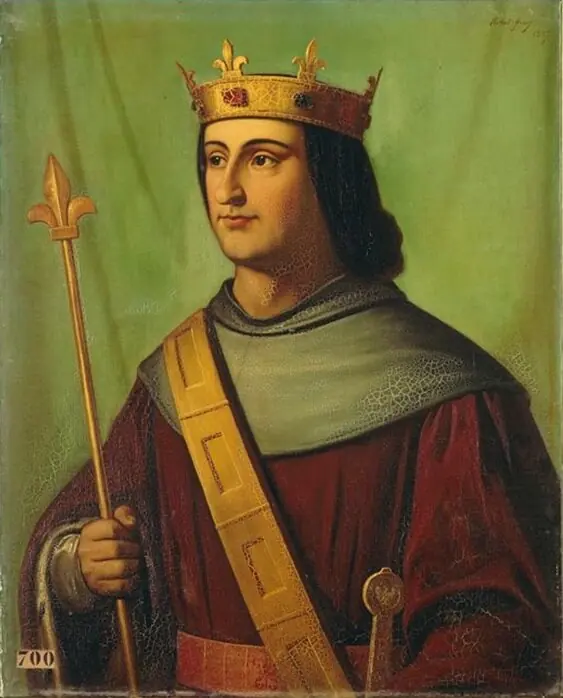
Public domain — Wikimedia Commons
1In brief
A nephew of Philip the Fair, Philip of Valois was chosen as king in 1328, on the death of his cousin Charles IV, in preference to King Edward III of England. His reign saw the start of the Hundred Years’ War, the defeat at Crécy, the loss of Calais and the Black Death. Yet he enlarged the kingdom with the Dauphiné and Montpellier.
2Life
The son of Charles of Valois, Philip the Fair’s brother, Philip was regent then king in 1328. He began with a victory at Cassel over rebellious Flemings. But in 1337 he confiscated Guyenne from King Edward III of England, who then claimed the crown of France: this was the start of the Hundred Years’ War. In 1340 the French fleet was destroyed at Sluys.
On 26 August 1346, at Crécy, French knighthood was crushed by the English archers. Calais fell the following year after a long siege. In 1348 the Black Death killed perhaps a third of the population. Philip created the salt tax, the gabelle, and in 1349 bought the Dauphiné for his grandson, as well as Montpellier. He died in 1350.
3Reign
- 1328Chosen as king; victory at Cassel
- 1337Confiscates Guyenne: the Hundred Years’ War begins
- 1340Naval defeat at Sluys
- 1346Defeat at Crécy
- 1347Loss of Calais
- 1348The Black Death
- 1349Purchase of the Dauphiné
4Legacy
Philip VI founded the Valois dynasty, which would reign until 1589. Despite his defeats, he kept his crown and enlarged the kingdom. The burghers of Calais, who gave themselves up to Edward III to save their town, inspired a famous sculpture by Rodin.
5Did you know?
His opponents called him “the found king”, because he had not been destined to reign.
The title of “Dauphin” appeared in his reign, with the purchase of the Dauphiné.
6Family
 John IIChild